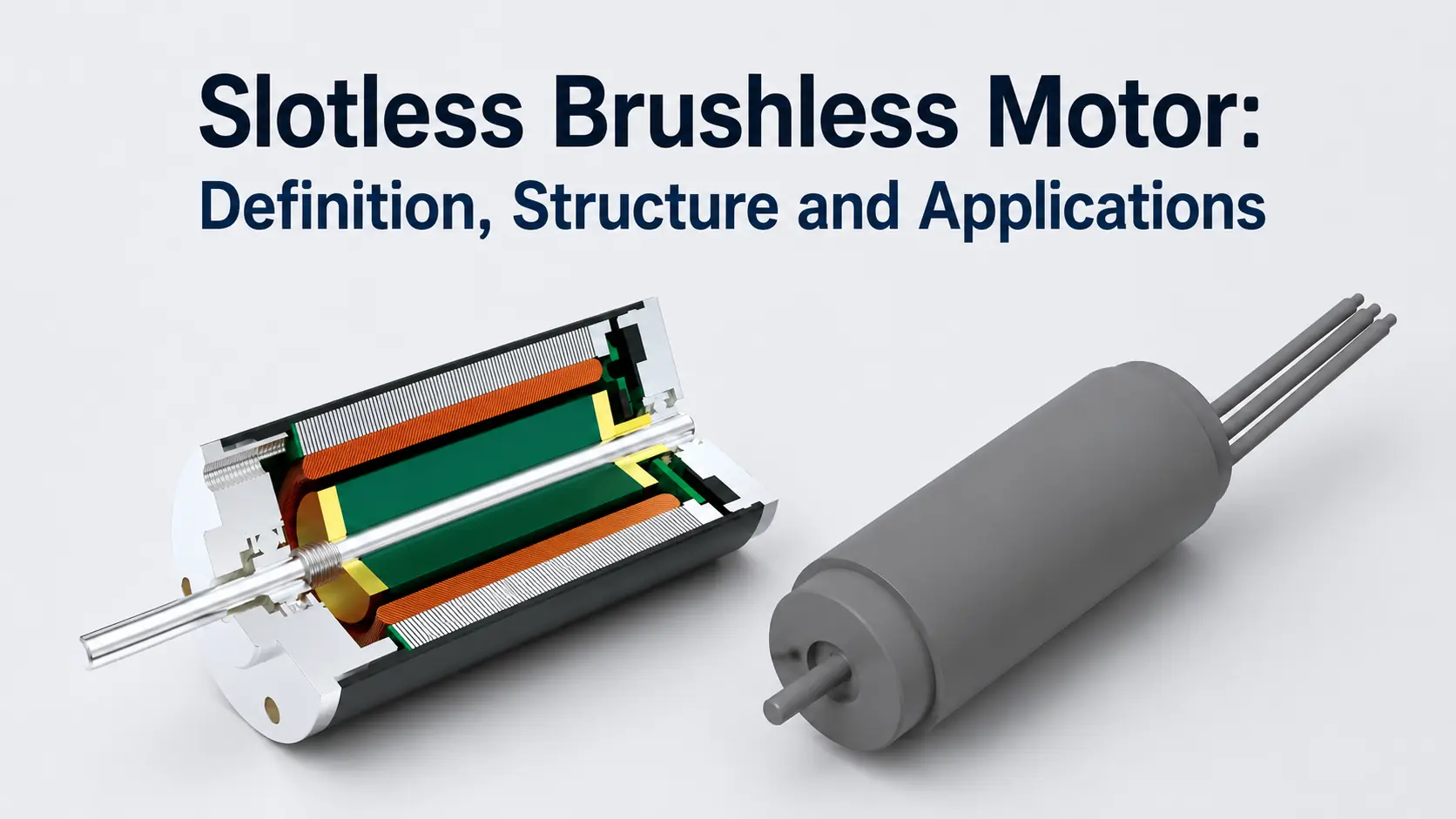
With the rapid growth of miniature servo systems, precision medical devices, and joints for bipedal humanoid robots, micro motor technology is undergoing major changes.
Among these technologies, the slotless brushless motor is also called a coreless brushless motor by manufacturers such as TSL MOTOR and Orbray.
It offers zero cogging torque, extremely low inductance, and high power density. These advantages have made it a preferred drive source for high-precision servo control systems.
Key Takeaways
- Slotless brushless motors offer smooth and precise motion.
- They have very low cogging torque and vibration.
- Their low inductance supports fast dynamic response.
- They are well suited to compact and high-speed systems.
- Thermal management is critical under continuous high loads.
- Slotted motors may be better for high continuous torque applications.
- Motor, gearbox, encoder, and driver integration is becoming more important.
Difference Between Coreless and Slotless Motors
Why is the same small brushless motor called a slotless motor by some manufacturers and a coreless BLDC motor by others?
The two terms emphasize different aspects of the motor design.
Slotless: No Conventional Stator Slots
A conventional slotted motor uses a magnetic stator with teeth and slots. Copper windings are placed inside the slots. A slotless design removes the conventional slot structure. The coil is usually fixed in the stator area with resin, tape, or a mechanical retaining structure.
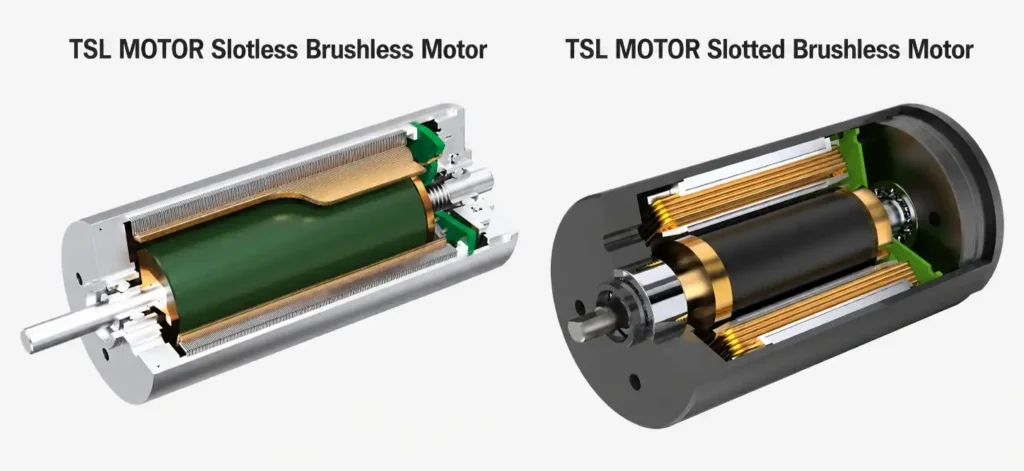
In a slotless BLDC motor, the winding is usually secured with resin or other methods. In a slotted motor, the winding is placed inside the slots. Removing the slots reduces torque ripple related to the cogging effect. This makes the motor suitable for applications that require smooth motion and high-speed performance.
Coreless: Windings Without an Iron Core
The term coreless traditionally refers to a winding structure with no iron core, or with greatly reduced iron-core involvement. In today’s miniature motor industry, manufacturers also use the term for product families that use self-supporting cup-shaped coils.
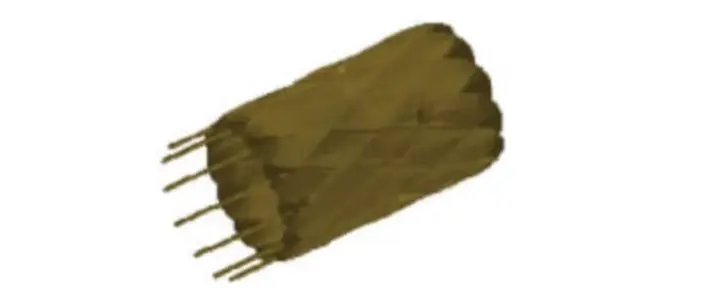
For example, Orbray lists its brushless motors under the DC Coreless Motors category on its English website. It also states that the stator uses a “slot-less core with cup-shaped coil,” with a permanent-magnet rotor inside. This shows that the terms coreless and slotless do overlap in commercial product naming.
A practical way to understand the terms is:
- Slotless mainly describes a motor without conventional stator slots;
- Coreless mainly emphasizes a cup-shaped, self-supporting winding structure, or one with reduced iron-core involvement;
In the miniature BLDC market, the two terms often refer to very similar motor structures. However, they are not strict synonyms across all motor topologies.
Structure of a Slotless Brushless Motor
A typical slotless brushless motor can be divided into four main layers from the outside to the inside.
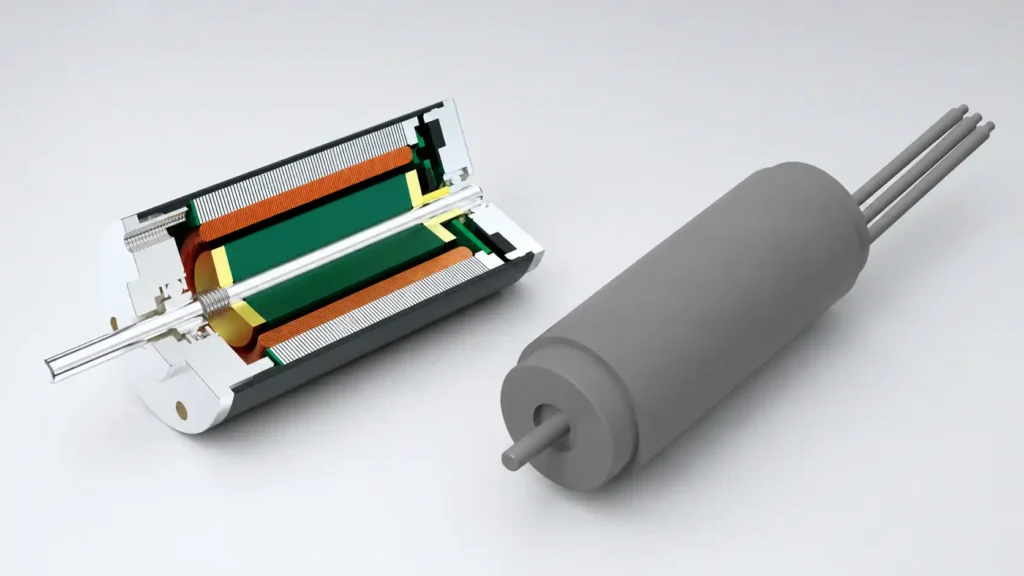
- Housing: Provides mechanical support and positioning. It also contributes to heat dissipation.
- Slotless magnetic ring: Usually made from laminated silicon steel. It forms the magnetic flux path.
- Coreless winding: This is a self-supporting winding structure. The enameled wire is softened by annealing, impregnated with varnish several times, and cured at high temperature. The insulation coating on adjacent copper wires bonds together and forms a hollow cylindrical structure. The winding does not rely on any stator slots for support.
- Permanent-magnet rotor: Usually uses NdFeB or SmCo magnets. It rotates inside the winding and transfers torque through the output shaft.
It is also worth noting that removing iron-core support can reduce rotor mechanical strength. At high speed, centrifugal force may deform the magnets.
For this reason, some manufacturers add a carbon-fiber or high-strength resin retaining sleeve around the rotor. This is also one reason why slotless brushless motors can be more expensive.
Advantages of Slotless Brushless Motors
A slotless brushless motor removes conventional stator slots. As a result, it offers low cogging torque, smooth operation, low vibration, and good low-speed control. These features make it suitable for dexterous hands, medical devices, and precision actuators.
Smoother Operation
Without conventional slots, the motor can greatly reduce cogging torque and achieve smoother low-speed motion. This is important for dexterous-hand gripping, fingertip adjustment, and compliant control.
Fast Dynamic Response
The slotless structure is suitable for frequent starts, stops, and reversals. It can respond quickly to controller commands. This makes it well suited for robot fingers and small joints with constantly changing operating conditions.
Low Vibration and Low Noise
Lower torque ripple helps reduce mechanical vibration and operating noise. It also improves the stability of precision control systems.
Suitable for High Speed and Miniaturization
Slotless brushless motors offer strong high-speed potential and can be made in very small sizes. TSL MOTOR has developed multiple 10 mm, 12 mm, and 13 mm Coreless BLDC Motors. They can be used in dexterous hands, robotic actuators, and other space-constrained precision drive systems.
Easy System Integration
In addition to standalone miniature motors, TSL MOTOR can provide integrated solutions that combine the motor, gearbox, encoder, and driver. For multi-DOF dexterous hands, this approach reduces wiring and installation space. It also lowers the development effort required for drive control and mechanical integration.
However, these advantages do not mean that slotless designs are suitable for every application. For continuous high-load and high-torque requirements, slotted and slotless designs must be compared in more detail.
The Biggest Challenge for Slotless Brushless Motors
Slotless designs offer low cogging torque, high-speed capability, and smooth operation. However, under continuous high-load conditions, thermal management can become a key factor that limits continuous output capability.
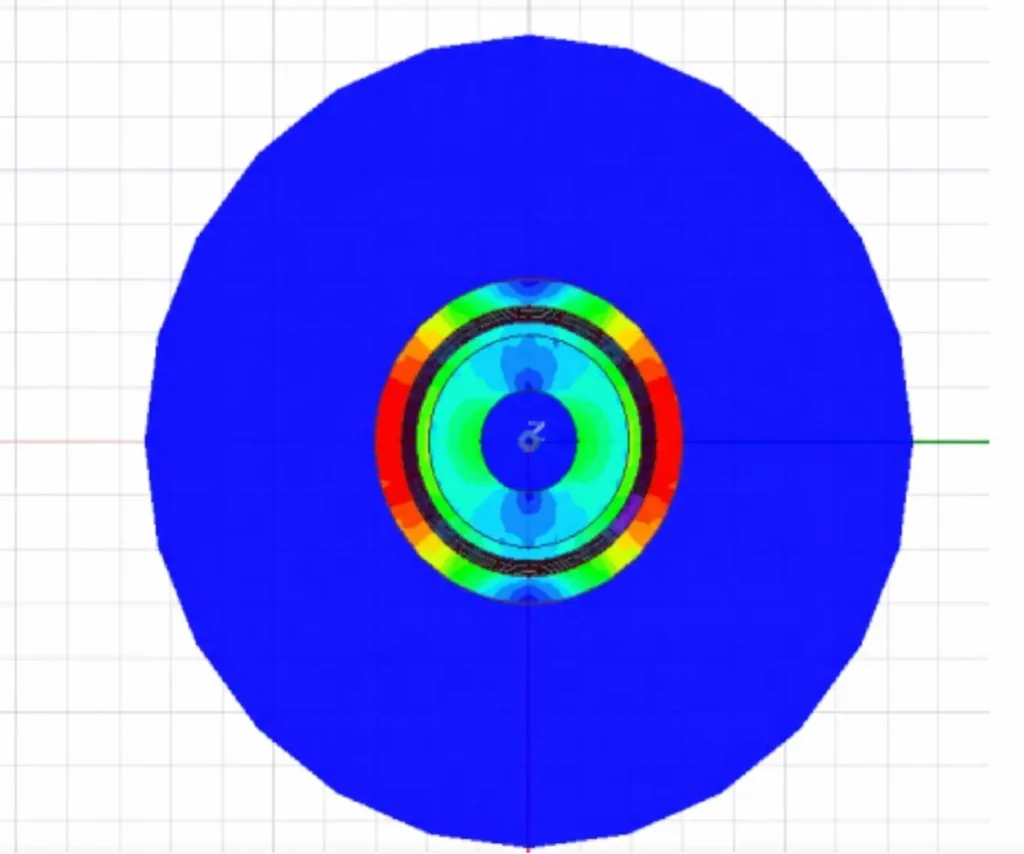
Slotted BLDC motors can achieve higher air-gap flux density and higher torque. Their slot structure also supports heat dissipation and cooling. Copper loss is essentially I²R loss caused by winding resistance. It is ultimately converted into heat.
However, it would be wrong to conclude that all slotless motors always have poor heat dissipation.
The thermal performance of a slotless motor depends heavily on its specific structure. The key issue is not simply whether slots exist. The real question is whether the heat generated by the winding can follow a low-thermal-resistance path to the housing and the complete machine structure.
How Can the Temperature Rise of a Slotless Motor Be Reduced?
Temperature rise cannot be solved with a single material. A more practical approach is to work in two directions: reduce heat generation and create effective heat-transfer paths.
Reduce Winding Copper Loss at the Source
The first step is to optimize winding resistance, wire diameter, current density, winding fill factor, and drive control strategy.
Copper loss increases with the square of current. Under high-load conditions, even a small increase in current can cause a noticeable increase in heat generation. Dexterous hands frequently start, stop, and change load. Peak-current strategies and continuous-current limits should therefore be designed separately.
Optimize the Thermal Path
Slotless windings are usually fixed with resin, adhesive structures, or mechanical methods.
TSL MOTOR improves thermal management by optimizing winding fill factor, insulation systems, varnish impregnation or potting materials, adhesive-layer thickness, and the contact path between the winding and the housing.
It is important to note that resin does more than transfer heat. It also provides insulation, mechanical fixation, and improved mechanical reliability. Whether it improves heat dissipation depends on the thermal properties of the material and the structural design. Varnish impregnation alone does not automatically solve temperature-rise problems.
Use Amorphous Materials to Reduce Losses
In a suitable magnetic circuit, low-loss amorphous soft magnetic materials can be considered. They can reduce core loss and the additional heat generated by magnetic losses.
The Complete Customer System Must Be Part of the Thermal Design
For miniature motors installed in dexterous hands, the customer’s mechanical structure is more than just a mounting bracket. It can also act as part of the heat-spreading path.
For example, an aluminum-alloy metal palm frame can help spread motor heat. At the same time, NTC feedback can be used for current derating, over-temperature protection, and dynamic load management.
If continuous output still fails to meet requirements after optimizing the winding, motor structure, and system-level thermal management, the motor topology should be reassessed. Simply increasing the current of the slotless motor is not the right solution.
Why Are Slotless Brushless Motors Especially Suitable for Dexterous Hands?
A dexterous hand is not simply an electric gripper. A complete hand system often requires multiple actuators to work at the same time. It has demanding requirements for size, weight, dynamic response, low-speed smoothness, and control accuracy.
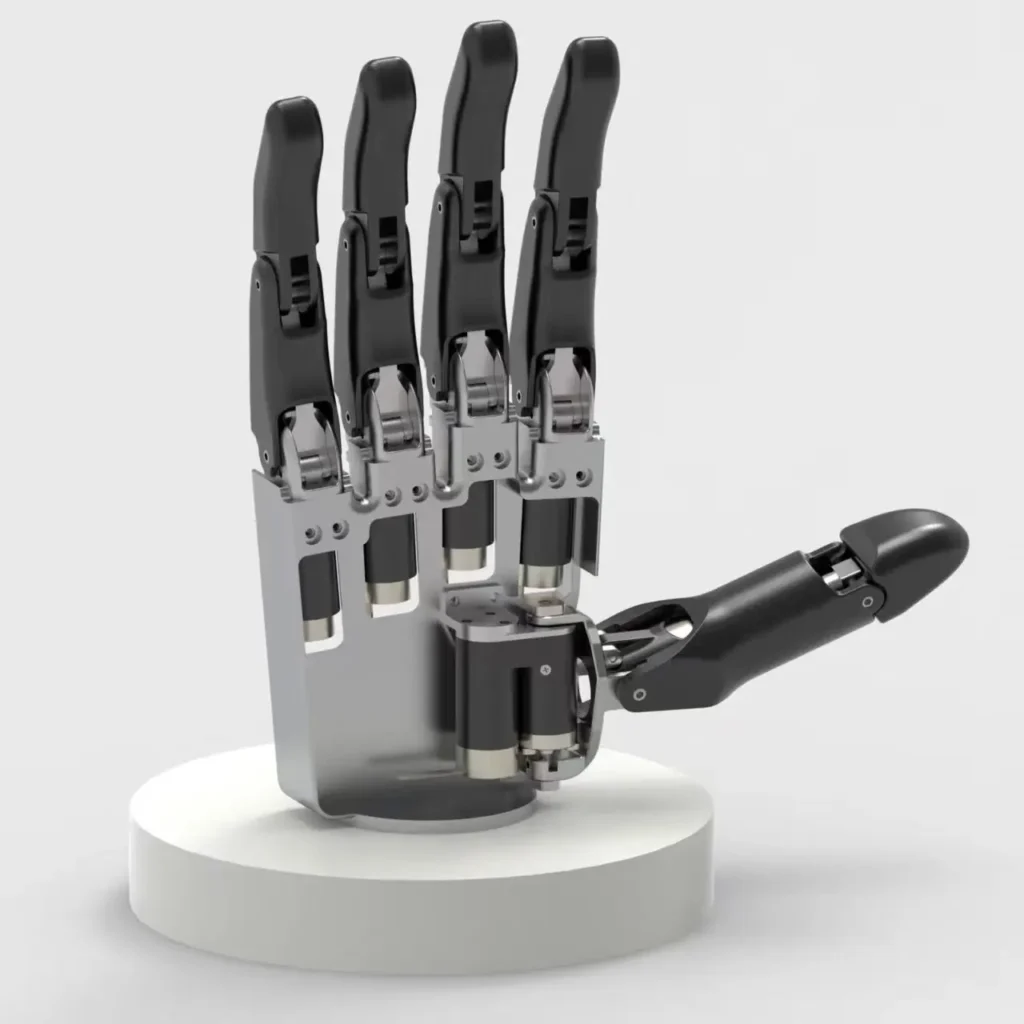
These requirements match the strengths of slotless brushless motors.
Smooth Motion Supports Fine Control
TSL MOTOR uses brushless coreless technology in multiple 10 mm, 12 mm, and 13 mm miniature drive modules. These modules feature low cogging effects, smooth rotation, and stable force control.
When gripping an egg, holding a glass, or adjusting the position of a small component, the actuator needs more than just high force. The force output must be stable, repeatable, and controllable.
Brushless Design Supports High-Frequency Motion
Miniature BLDC motors are suitable for applications that require long service life, low maintenance, high speed, low noise, and low vibration. They are also well suited to frequent changes in load and direction. Robotics is a typical application area.
Dexterous-hand fingers frequently accelerate, decelerate, reverse, and operate under changing loads. This makes brushless solutions especially attractive.
Motors, Encoders, and Drivers Are Becoming More Integrated
Motor diameter is not the only factor that affects wiring and integration in a dexterous hand.
TSL MOTOR has mature integrated module solutions that combine the motor, encoder, and built-in driver. A closed-loop solution can be connected with only four wires. Three-phase output is also available, together with Hall sensors, absolute encoders, and incremental encoders.
A dexterous hand may contain more than ten, or even more than twenty, actuators. Integration can reduce the number of wires, connectors, and control-system integration tasks.
Therefore, future competition in slotless brushless motors may not be only about which motor has the highest specifications. The real question is whether the motor, gearbox, encoder, driver, temperature monitoring, and control software can form a complete miniature servo actuator.
Slotless or Slotted Motor?
A slotless brushless motor is not the only answer for every project.
Portescap’s technical materials state that slotless motors are better suited to applications requiring high speed and smooth operation. Slotted BLDC motors can achieve higher air-gap flux density and higher torque, while also offering better cooling conditions.
A slotted motor should be seriously considered in the following situations:
- Long periods of continuous high-load operation;
- The required continuous torque is much more important than short-term dynamic performance;
- The motor installation space is extremely limited, while the system cannot provide effective external cooling;
- Temperature-rise limits are very strict;
- The operating point remains in the low-speed, high-torque region for long periods;
- Cost is more important than extremely low cogging torque and ultimate smoothness.
TSL MOTOR’s product portfolio covers multiple motor technologies. Its Brushed DC Motor range includes slotted, slotless, and coreless design categories. The company also offers Coreless DC Motors, BLDC Motors, DC Gear Motors, and other product series.
For customers, professional motor selection is not about proving that one structure is always the best. The correct approach is to select the right solution for the actual operating point.
For small size, low cogging torque, high speed, and smooth control, a slotless brushless motor is a strong option. For higher continuous load capacity, stronger thermal management, or more cost-sensitive applications, a slotted motor should be evaluated.
Conclusion
Slotless brushless motors have become an important drive technology for dexterous hands. The reason is not simply that they have no slots.
Their real value comes from several factors working together. These include smooth operation, low cogging torque, compact size, electronic commutation, and the ability to combine with encoders, gearboxes, and drivers to form complete miniature servo systems.
At the same time, the challenges are very real. As motors become smaller and output requirements increase, winding copper loss, thermal resistance, temperature monitoring, and system-level heat dissipation become more important.
TSL MOTOR’s current product portfolio includes Coreless BLDC drive modules for dexterous-hand applications and a wide range of DC motor solutions. Integrated motor, encoder, and driver configurations are also available.
For different robot fingers, palms, and actuation mechanisms, the final answer may not be a single motor. It may be a fully matched drive system.
📞 [Contact Our Engineers Today] to get a free technical assessment or product catalog!
FAQ
1. What is a slotless brushless motor?
A slotless brushless motor is a BLDC motor without traditional stator slots and teeth. It offers smooth rotation, low cogging torque, low vibration, and fast response.
2. What is the difference between slotless and slotted motors?
Slotless motors are better for smooth motion, high speed, and precise control. Slotted motors are often better for higher continuous torque and demanding thermal conditions.
3. Where are slotless brushless motors used?
They are widely used in dexterous robot hands, medical devices, precision instruments, compact servo systems, and other space-limited applications.
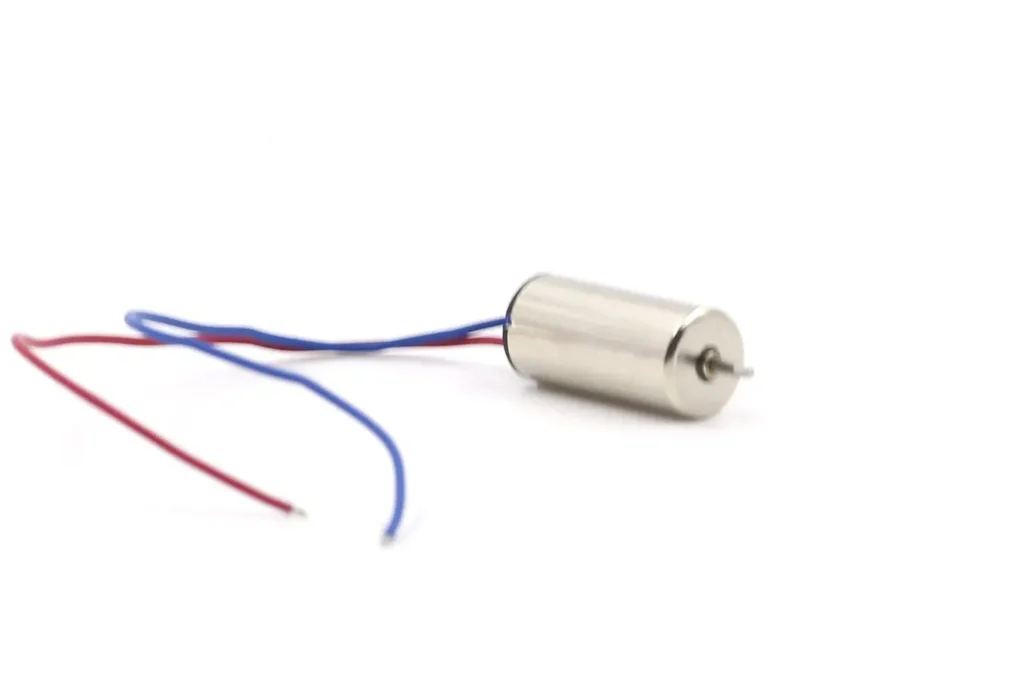
Coreless DC Motor
Coreless DC motors eliminate the traditional laminated iron core in the rotor. Instead, they use a stationary high-performance toroidal magnet as the core. The motor’s windings are attached to the motor shaft and placed in a resin mould that rotates around the magnetic core. Without an iron core to support the windings, epoxy is often used to hold them in place.
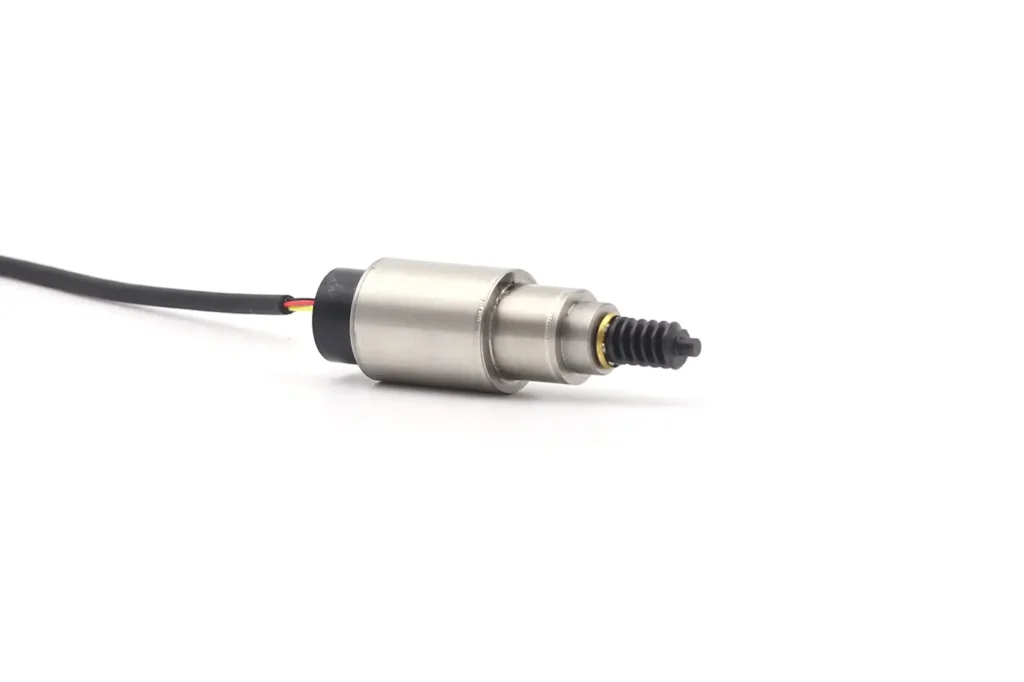
Dexterous Hand Drive Module
As a dedicated manufacturer of high-performance robotic components, we deliver advanced Dexterous Hand Drive Modules engineered for the next generation of humanoid robots and bionic hands. All our specifications are backed by rigorous, real-world laboratory measurements—ensuring reliable torque, precision, and longevity in demanding applications.
Whether your robotic hand design utilizes direct-drive (DD), linkage mechanisms, or cable-driven (tendon-driven) systems, our modular platform offers the exact actuation solution you need.