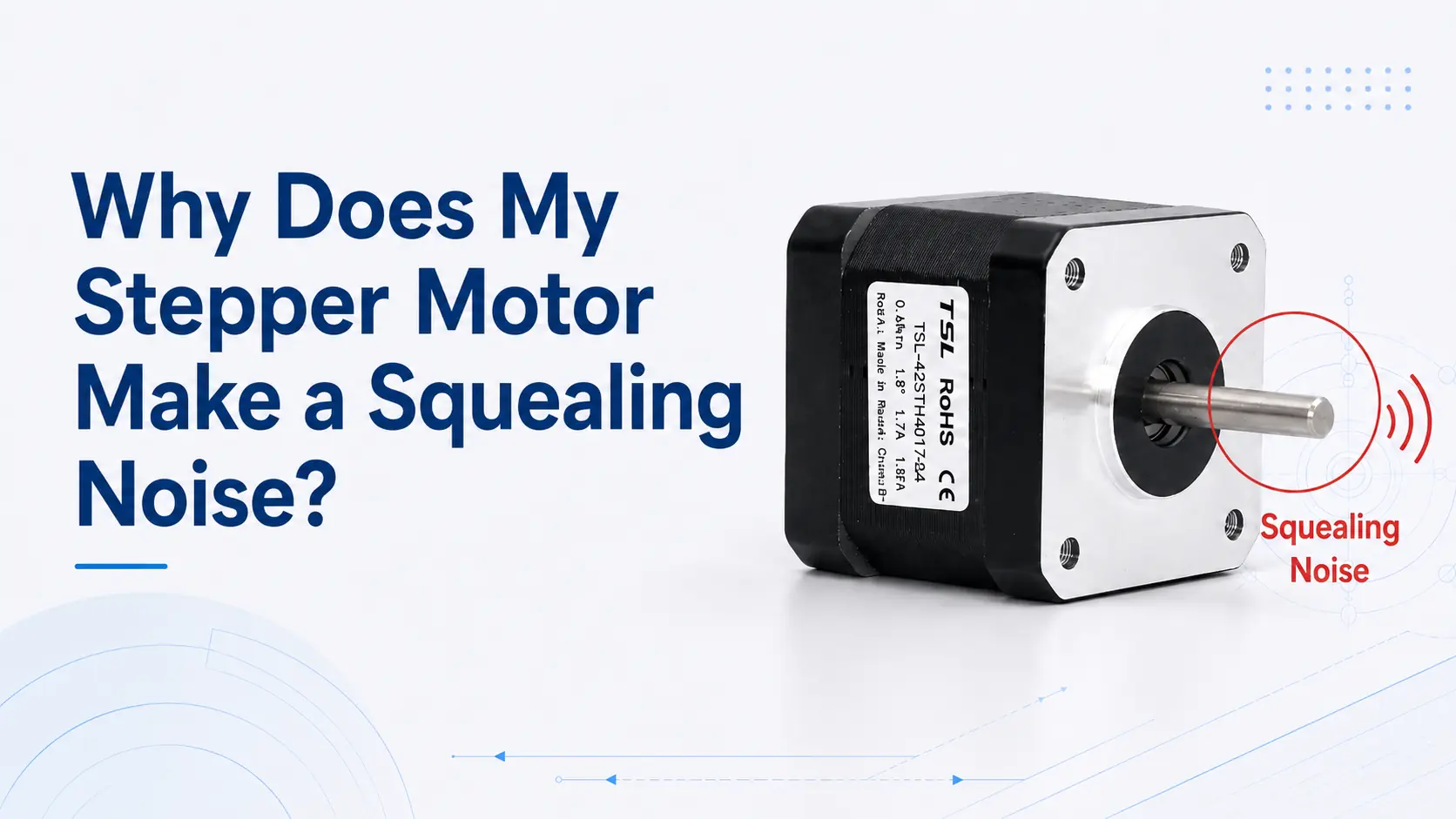
When using 3D printers, engraving machines, small automation equipment, or robot models, many users face the same problem.
The stepper motor may make a sharp squealing sound, buzzing sound, or creaking noise when it is powered on and locked, or when it runs at low speed.
This noise affects the user experience. It may also make people think the motor is faulty. Many beginners replace the motor or driver blindly. But the problem still remains.
In fact, stepper motor squealing is usually not caused by hardware damage. In most cases, it comes from motor vibration.
Key Takeways
- Stepper motor squealing is usually caused by vibration.
- Low speed can easily trigger resonance.
- Microstepping helps the motor run more smoothly.
- Increasing speed can reduce high-frequency noise.
- A gearbox is useful for heavy-load applications.
- Driver current and acceleration settings matter.
- Always check the system before replacing the motor.
The Nature of Squealing
The squealing of a stepper motor is usually not a “friction sound.” It is “vibration turning into sound.”
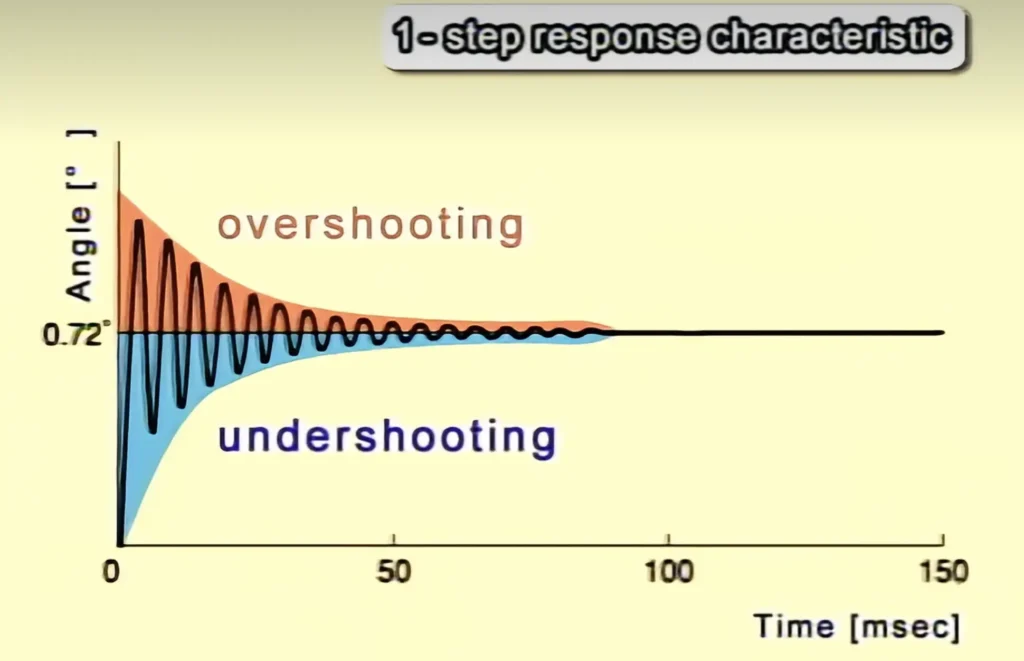
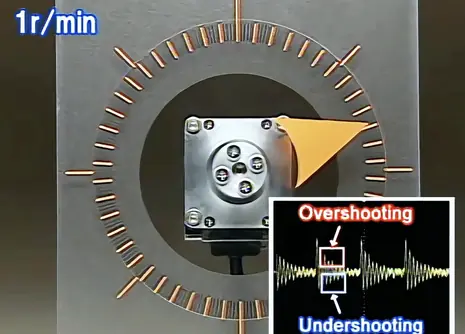
Every time a stepper motor receives a series of pulses, it moves the rotor from one stable position to the next stable position. The problem is that the rotor and load both have inertia. They do not stop exactly at the target point. They often overshoot first. Then they are pulled back by the magnetic field. As a result, they swing back and forth around the stable point.
This process is called oscillation. If the next phase change comes too early, the oscillation has not disappeared yet. It can easily overlap and become resonance. The greater the inertia, the easier it is to overshoot and swing around the stable position.
The reason why the squealing sound is “sharp” is also related to the drive frequency. If the stepping frequency and its higher harmonics fall within the audible range of 20 Hz to 20 kHz, the human ear can hear them directly. Current ripple caused by low microstepping and mixed decay can also make the noise more obvious.
Which Conditions Trigger It Most Easily
Once you understand the principle, the trigger conditions are easy to understand. Many cases that seem to “start squealing for no reason” actually have patterns.
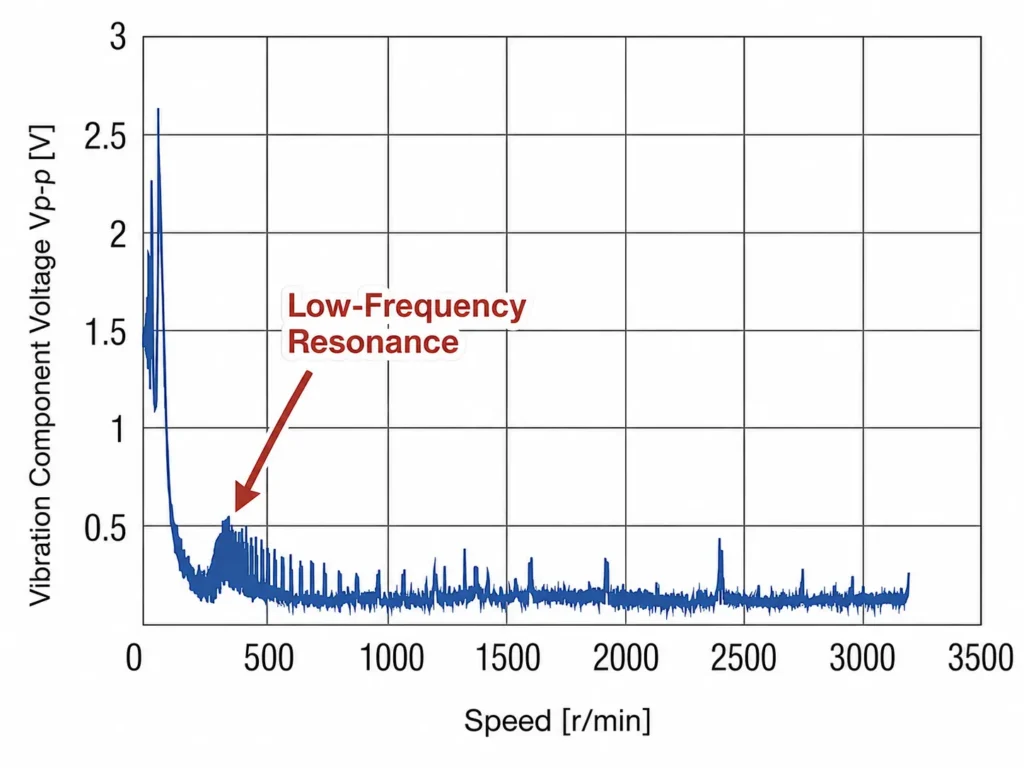
The most common condition is low speed and certain medium-low speed ranges. Oriental Motor data mentions that stepper motors may show clear resonance in certain speed ranges.
For two-phase stepper motors, the range around 100–200 Hz is especially typical. Magnetic noise and mechanical vibration are more obvious at low speed.
Another reason is insufficient microstepping or unsuitable driver parameters. If the subdivision is too low, the energy of each step is too large. The rotor is more likely to overshoot. Mixed decay, current ripple, and harmonic components can also push the noise higher.
There are also two common cases. First, the current, voltage, and acceleration time are not set well. This may cause insufficient torque or overly aggressive phase switching. Second, the load inertia, coupling, frame, and mounting plate join the resonance together.
Solution 1: Increase the Running Speed
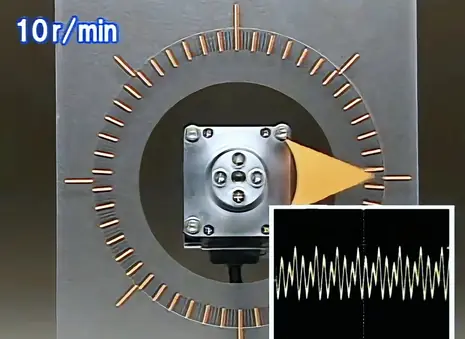
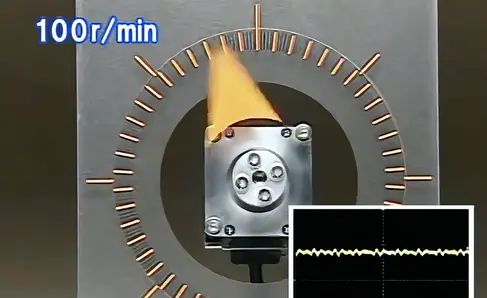
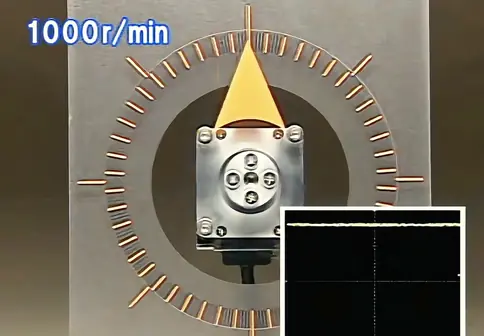
Based on the above test patterns, increasing the motor speed is the simplest zero-cost way to solve squealing. This method does not require hardware replacement. It only needs parameter adjustment. It is suitable for beginners to apply quickly.
Core Principle of Speed Increase for Noise Reduction
When the motor runs at low speed, the time interval between each step is long. The rotor has enough time to swing after each step. The vibration keeps stacking up. This creates a stable high-frequency noise.
After the speed is increased, the pulse switching frequency becomes much faster. Before the rotor finishes swinging back and forth, the next pulse drives the motor to continue rotating.
The vibration of the previous step and the next step can cancel and suppress each other. The swing amplitude of the rotor is greatly reduced. The high-frequency vibration disappears. The squealing noise is then eliminated.
Advantages and Disadvantages of the Speed Increase Method
Every adjustment method has its own limits. Speed increase for noise reduction is no exception.
Advantages: zero cost, simple operation, no hardware change, and high adjustment efficiency.
Disadvantages: some equipment needs low-speed precise positioning. Examples include 3D printer fine adjustment and precision movement. In these cases, increasing speed alone cannot solve the problem. So this method has limits.
Solution 2: Microstepping Drive
When the equipment cannot increase speed and must run at low speed with high precision for a long time, microstepping drive is the most common and most effective solution for stepper motor squealing. It is also the core noise reduction method for industrial equipment and precision models.
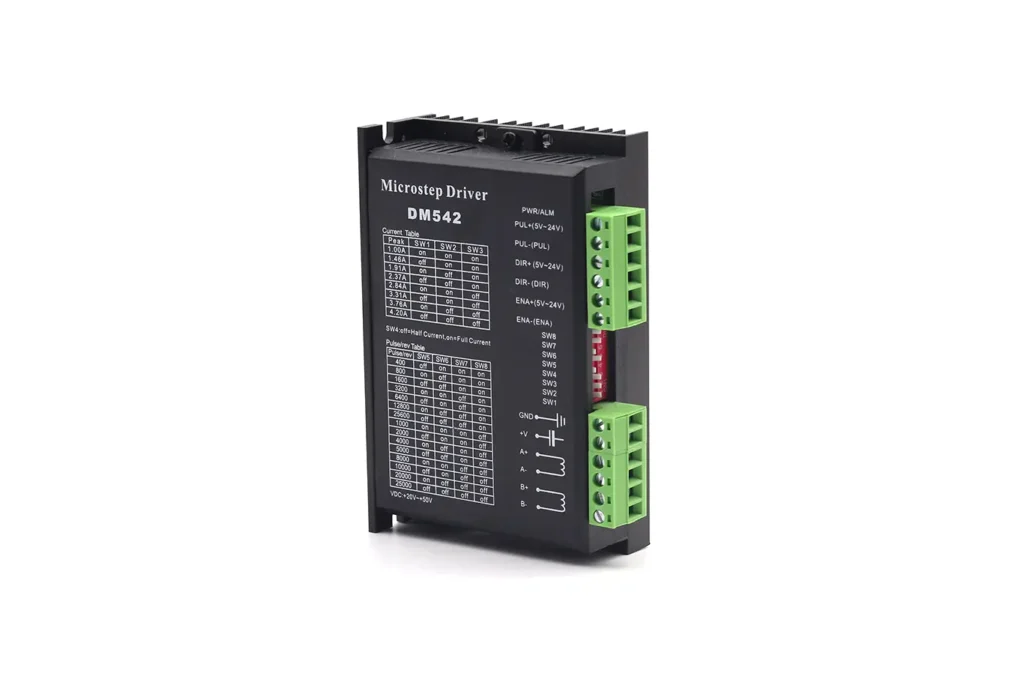
Working Principle of Microstepping Drive
In normal full-step drive mode, the motor rotates 1.8 degrees per step. The single-step angle is large. The rotor starts and stops with strong impact. The swing amplitude is also large.
The core of microstepping drive is to divide one large step into dozens or even hundreds of small steps.
Take 16 microsteps as an example. The original 1.8-degree full step is divided into 16 tiny movements. The motor no longer moves in a stiff “step-by-step” way. It becomes closer to smooth continuous rotation.
The tiny step angle can greatly reduce the inertia swing of the rotor. It reduces high-frequency vibration from the source. It can fully remove the squealing noise.
Practical Notes for Microstepping Drive
Increasing microstepping can reduce noise. But you should not set an extremely high subdivision blindly. Otherwise, new problems may appear.
The higher the microstepping, the higher the requirement for driver pulse accuracy. For ordinary low-end drivers, it is not recommended to set the subdivision above 32. Otherwise, lost steps and torque reduction may occur.
For common consumer equipment and DIY models, 16 microsteps are usually the best choice. It balances noise reduction, torque stability, and hardware cost.
After adjusting the subdivision, you need to modify the controller pulse parameters at the same time. This keeps the running speed unchanged. It also avoids positioning errors.
Microstepping drive is highly compatible. It can effectively suppress rotor vibration in high-speed, low-speed, and static holding conditions. It is currently the most cost-effective general noise reduction solution.
Solution 3: Add a Gearbox
For large-inertia loads and low-speed heavy-load equipment, speed increase and microstepping may have limited noise reduction effects. In this case, you can modify the hardware and add a gearbox. This suppresses rotor swing physically and eliminates squealing.
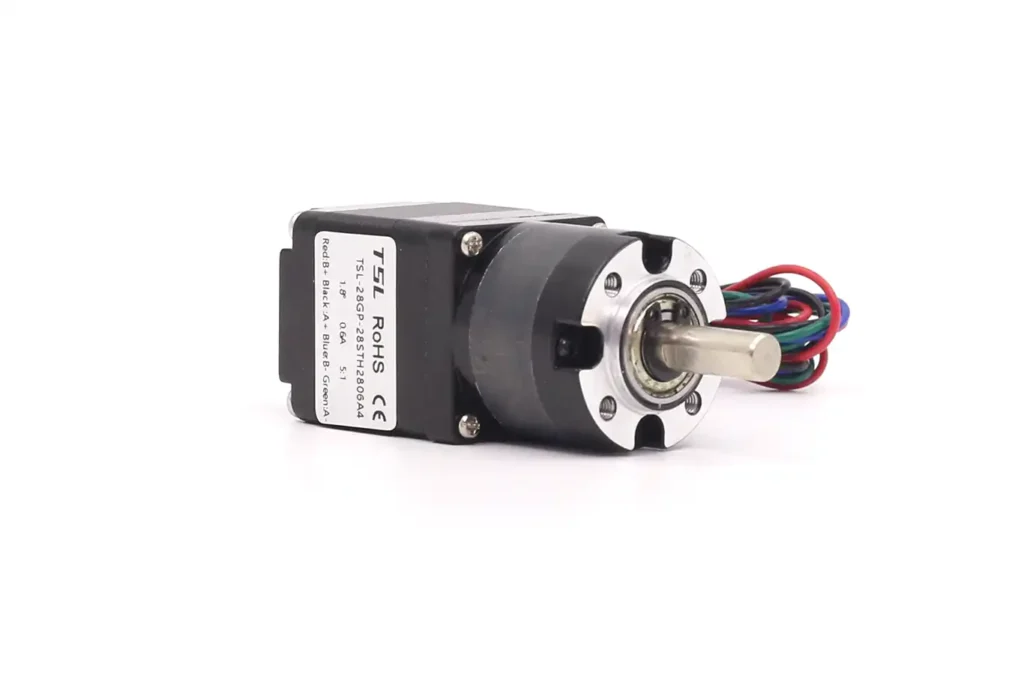
Core Noise Reduction Principle of the Gearbox
The root cause of squealing is small swing caused by rotor inertia. A gearbox can suppress vibration in two ways.
First, the gear transmission structure of the gearbox increases damping resistance at the motor output end. The swing caused by rotor inertia is offset by the meshing gear structure. It cannot form high-frequency vibration.
Second, the gearbox can reduce the speed at the load end while keeping the motor running at a higher speed. The motor itself works in a stable high-speed condition.
There is no low-speed vibration or squealing. At the same time, the load end can achieve low-speed precise movement. This is ideal for heavy-load and low-speed applications.
Application Scenarios, Advantages, and Disadvantages of the Gearbox Method
This method is a hardware modification. It is more targeted. It is suitable for specific working conditions.
Application scenarios: low-speed heavy-load equipment, precise low-speed positioning, equipment that cannot increase speed, and automation equipment that stays locked for a long time.
Advantages: excellent noise reduction, high running stability, greatly reduced lost steps, and improved equipment accuracy.
Disadvantages: extra hardware is required. The equipment size increases. There is a small amount of mechanical transmission loss. The cost is higher than parameter adjustment.
Engineering Cases and Lessons Learned
Case 1: Desktop printers and 3D printers
This type of equipment often uses 42-frame motors or NEMA17 motors. The speed is not always high. But there are many low-speed sections. Starting and stopping are also frequent. We list printers and 3D printers as typical noise-sensitive applications.
The real problems often come from low microstepping, low-speed holding, thin steel frames, and long belts working together.
Based on experience, it is often more effective to increase full-step or low microstepping to 1/16 or 1/32 first. Then enable half current at standstill. Also reinforce the motor mounting plate and housing. This is often better than directly changing to a larger motor.
Case 2: CNC engraving machines, laser machines, and CNC platforms
For these systems, the bigger problem is not just a “slight noise.” The real risk is that the motor may lose steps while making noise. Their load inertia is larger. Reverse impact is also more obvious.
A common method is to increase the supply voltage to the compliant range of 36 V or 48 V. This ensures high-speed torque. At the same time, use smoother acceleration and deceleration to quickly pass through the low-to-medium speed resonance range.
If the reflected load inertia is too large, adding a gearbox is usually more reliable than simply increasing the current. The lesson is clear. For CNC equipment, a sharp squeal is usually not just unpleasant. It can be an early sign of synchronization instability.
Case 3: Automation conveying, labeling, and assembly lines
The trouble with conveyor systems is that the load changes a lot. Friction changes a lot. Starting and stopping happen often. It may be quiet without load but noisy with materials. It may be quiet in the morning but noisy again after warm-up at full speed. These cases are very common.
In this situation, a reduction mechanism is often very valuable. When using a geared motor, the allowable inertial load increases with the square of the gear ratio. This is exactly useful for systems that “can move the load but make serious noise.”
Troubleshooting Order
For most projects, the following troubleshooting and improvement order is the most practical. It follows the principle of “low cost and low risk first; high cost and major changes later.”
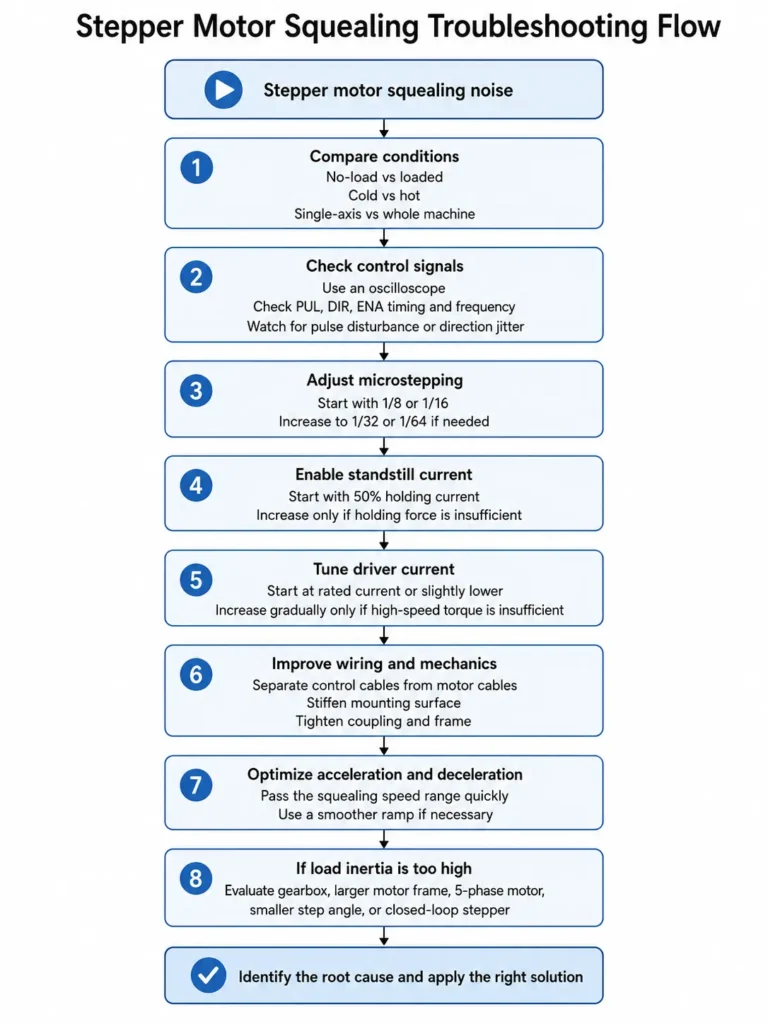
After completing this process, if the system still squeals, it usually reveals a more fundamental problem. The issue is not poor parameter adjustment. The motor, load, and structure may not match from the beginning. At this stage, changing the reduction method, motor size, or drive architecture often saves more time than further fine adjustment.
Summary
The high-frequency squealing, buzzing, and abnormal noise of a stepper motor are not mainly caused by hardware damage. The core reason is stepping vibration caused by the physical inertia of the rotor. The step-by-step running characteristic of a stepper motor, combined with low-speed operation, causes continuous small rotor swings. This creates audible squealing noise.
Many practical tests prove that the three core solutions each have their own advantages. Speed increase is zero cost and easy to apply. It is suitable for simple equipment. Microstepping drive reduces vibration from the operating logic. It fits most precision DIY equipment and small automation equipment. Adding a gearbox uses physical damping to suppress swing. It is ideal for stubborn squealing in low-speed heavy-load equipment.
Users do not need to blindly replace the motor or driver. They only need to choose the right adjustment or modification method based on the equipment’s working conditions and accuracy requirements. This can eliminate stepper motor squealing at low cost. It can also improve running stability and service life.
FAQ
1. Why does my stepper motor make a squealing noise?
It is usually caused by vibration, not motor damage.
2. Is stepper motor squealing normal?
Yes. It often happens at low speed or in resonance speed ranges.
3. Will replacing the motor solve the noise problem?
Not always. The problem is often related to speed, driver settings, load, or structure.
4. Why is the noise louder at low speed?
At low speed, the rotor has more time to swing after each step. This can create resonance.
5. Can microstepping reduce stepper motor noise?
Yes. Microstepping makes motor movement smoother and reduces vibration.