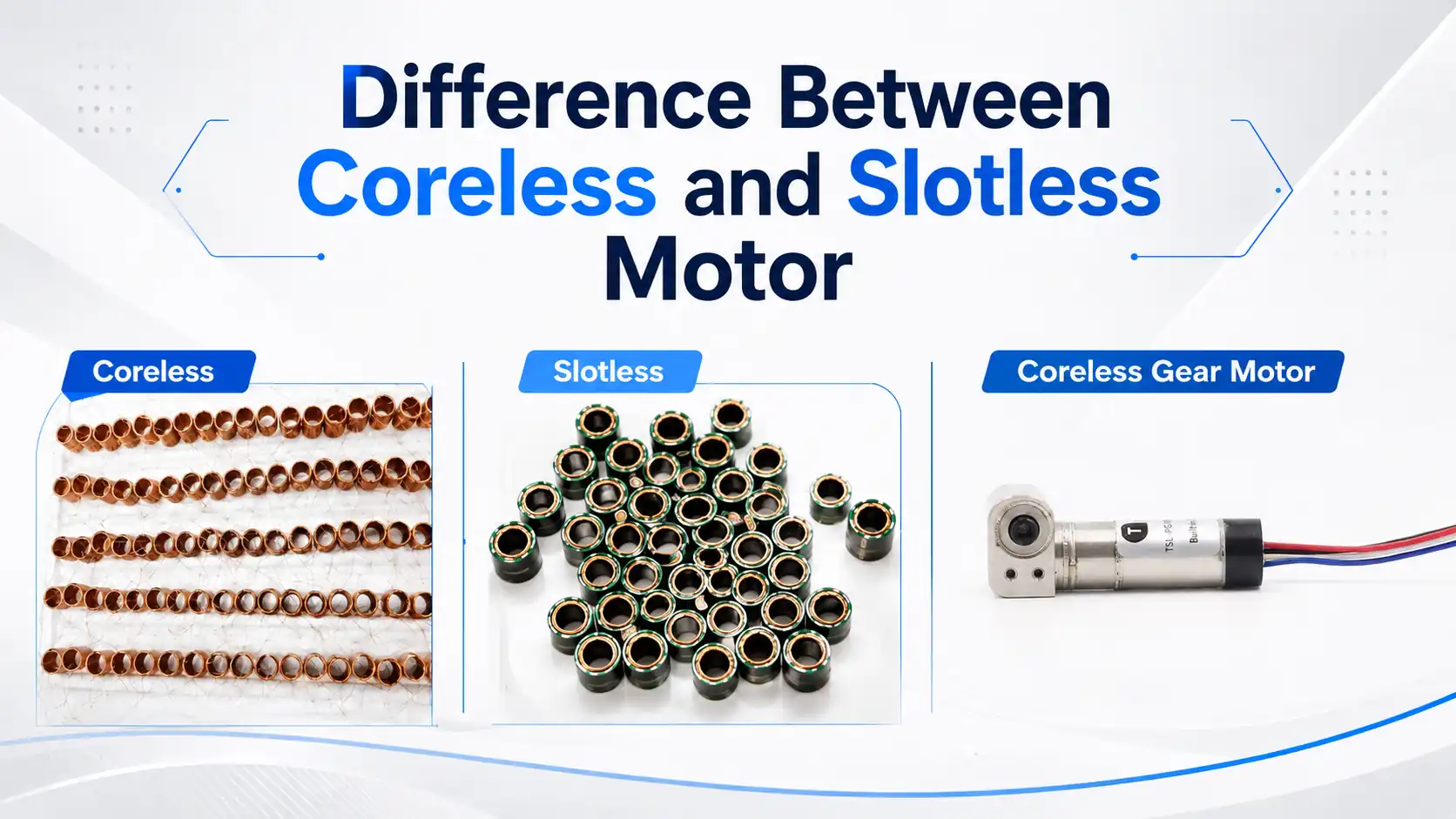
In the field of precision motors, coreless motors and slotless motors are often discussed together because both can provide smooth operation, low noise, low torque ripple, and good high-speed performance.
TSL MOTOR offers brushed coreless motors with lightweight self-supporting windings, as well as brushless slotless motors designed to reduce cogging torque and vibration. Although their performance characteristics may be similar, “coreless” and “slotless” describe different structural features.
A coreless design refers to the absence of a conventional iron core inside or directly supporting the winding, while a slotless design refers to a stator without traditional teeth and winding slots. Understanding this difference helps users select the right motor for precision applications.
At a Glance
“Coreless” removes the iron core inside the winding to achieve ultra-low inertia and rapid response, while “slotless” eliminates stator teeth to deliver zero cogging torque and perfectly smooth motion.
What Is a Coreless Motor?
In the term “coreless motor,” the word “core” mainly refers to the ferromagnetic material located inside or close to the winding and used to strengthen and guide the magnetic field.
In a conventional motor, copper wire is usually wound around teeth made from laminated electrical steel. The iron core reduces the magnetic reluctance of the magnetic circuit and concentrates the magnetic flux, thereby increasing the air-gap flux density and improving the motor’s torque-producing capability.
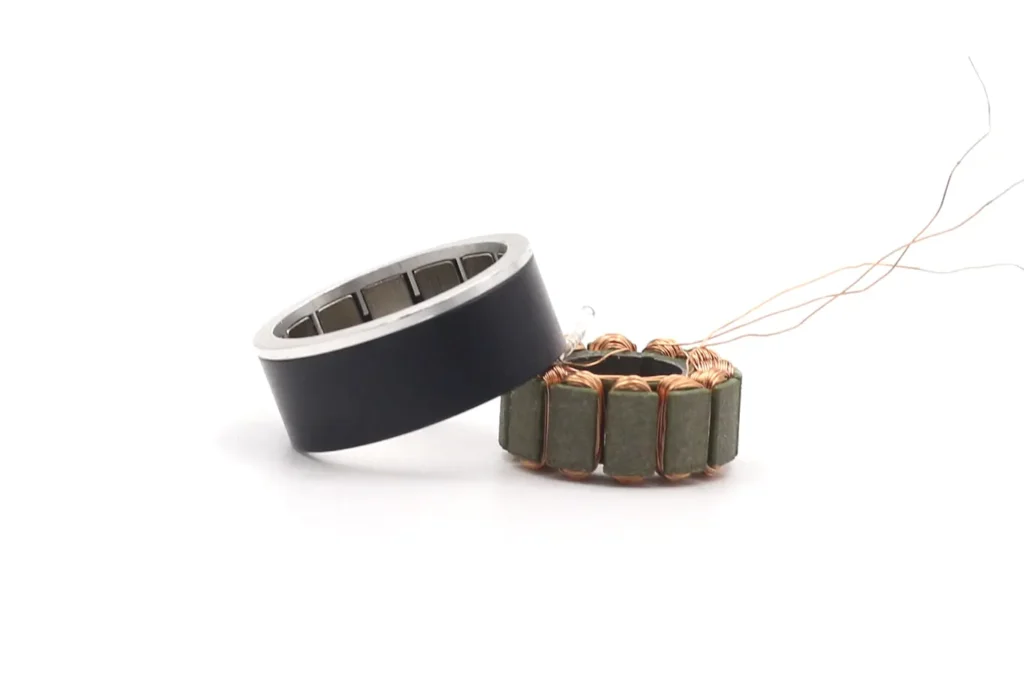
However, the iron core also introduces additional mass, rotational inertia, and iron losses. It may also cause magnetic saturation, hysteresis loss, and eddy-current loss.
A coreless motor removes the conventional iron core from the active winding structure. Instead of being wound around laminated steel teeth, the copper winding is formed into a self-supporting cup-shaped, cylindrical, disc-shaped, or otherwise specially designed structure. Resin, adhesive, or composite materials are then used to maintain the shape and mechanical strength of the winding.
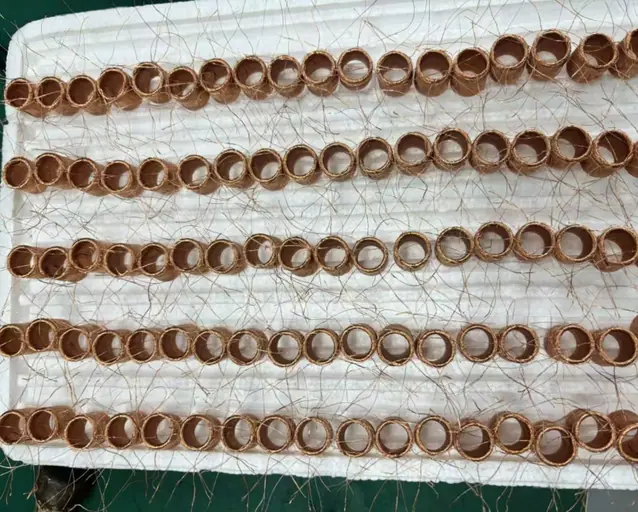
Maxon describes its coreless winding as a self-supporting copper winding and highlights the low rotational inertia and excellent dynamic performance made possible by this structure. FAULHABER also regards its self-supporting skew-wound coil as one of the key foundations of its coreless drive technology.
Therefore, “coreless” does not mean that the entire motor contains no ferromagnetic material at all. Ferromagnetic materials may still be used in the housing, magnetic yoke, or other parts of the magnetic return path.
The key point is that the active winding responsible for generating electromagnetic force is no longer wound around conventional iron-core teeth.
What Is a Slotless Motor?
A slotless motor is defined not by whether the winding contains an iron core, but by the geometric structure of the stator.
The inner surface of a conventional stator normally contains a number of projecting stator teeth. The spaces between these teeth form slots, and the copper windings are inserted into these slots.
The stator teeth concentrate magnetic flux and provide mechanical support and a heat-transfer path for the windings. At the same time, however, they cause the magnetic permeance of the air gap to vary periodically around the circumference of the motor.
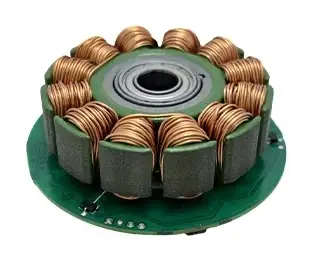
As the rotor magnets pass the stator teeth and slots, the magnetic reluctance changes from one angular position to another. Even when no current is applied to the winding, the rotor tends to settle at positions where the magnetic reluctance is lower.
This periodic variation in magnetic attraction produces cogging torque, which can negatively affect low-speed smoothness and positioning accuracy.
A slotless motor removes the conventional stator teeth and slots. The winding is generally formed into a cylindrical or other self-supporting shape and placed in the annular space between the rotor magnets and the stator yoke.
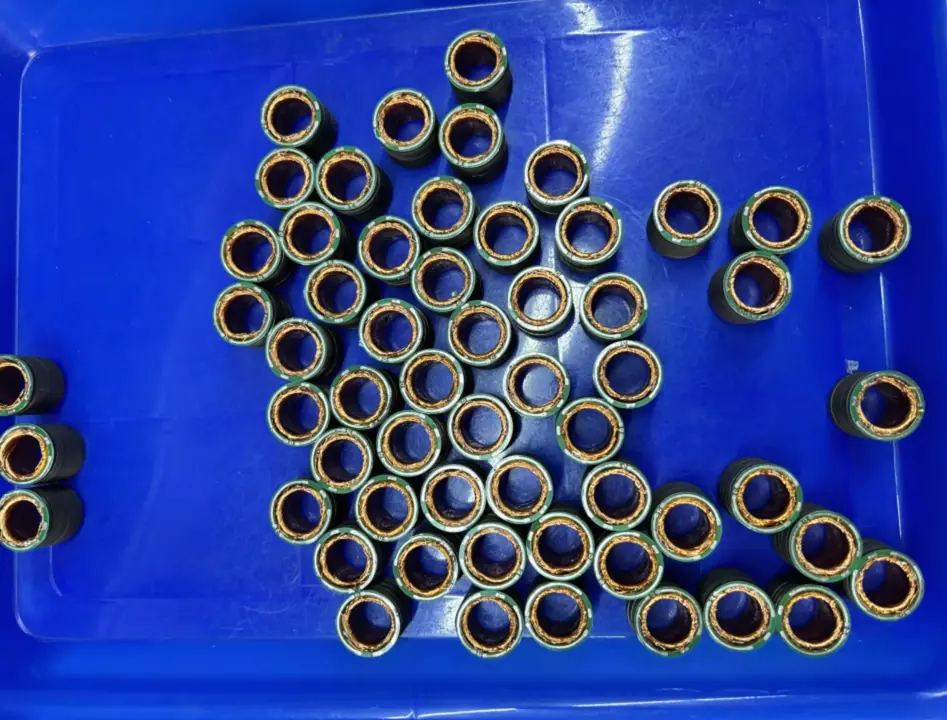
Because the stator surface facing the rotor is relatively smooth, the circumferential variation in magnetic permeance is greatly reduced. As a result, cogging torque can be significantly reduced through the motor’s physical structure.
Portescap describes a slotless design as one in which the winding is no longer inserted into stator slots but is instead formed as a self-supporting cylindrical coil. Since there are no pronounced stator teeth and slots, the rotor does not have the same preferred resting positions found in a conventional slotted motor.
However, it is important to understand that slotless does not necessarily mean that the stator contains no iron.
Many slotless motors remove the stator teeth that project toward the air gap but still retain a cylindrical laminated steel yoke or back iron. This smooth stator yoke remains part of the magnetic circuit, even though it no longer contains conventional teeth and slots.
Therefore, a motor can have a slotless structure while still containing ferromagnetic material in its stator.
What Is the Fundamental Difference?
The easiest way to distinguish between a coreless motor and a slotless motor is to ask two separate questions.
For a coreless motor, the question is:
Is there ferromagnetic material inside or directly supporting the active winding to concentrate magnetic flux?
For a slotless motor, the question is:
Does the stator surface facing the air gap contain visible teeth and slots?
In other words, a coreless design describes the relationship between the winding and the ferromagnetic core, while a slotless design describes the geometric shape of the stator magnetic circuit.
Is Every Coreless Motor Also Slotless?
In many commonly used structures, a coreless winding is not surrounded by conventional stator teeth. As a result, such a motor often also avoids the conventional cogging effect associated with teeth and slots.
For this reason, product literature sometimes uses the terms coreless, ironless, and slotless together. This can easily create the impression that the three terms are completely interchangeable.
Strictly speaking, however, they should not always be treated as identical.
A coreless design mainly indicates that the winding does not rely on a conventional iron core for support. A slotless design only indicates that the stator does not contain projecting teeth and slots used to hold the winding.
Some slotless motors still retain a complete cylindrical stator yoke outside the winding. The winding is placed in a smooth air gap, but ferromagnetic material remains in the magnetic return path.
In this case, the motor has no conventional slots, but it is not completely free of iron.
There are also some special slotless motors that use a truly ironless stator structure. For example, certain ThinGap slotless motors from Allied Motion use an ironless stator. Other slotless motor families may include a laminated magnetic yoke outside the winding to improve magnetic-circuit performance or heat dissipation.
A more accurate conclusion is therefore:
A coreless motor usually does not have conventional stator slots, but a slotless motor is not necessarily completely coreless or ironless.
What Problems Does Each Structure Solve?
A coreless structure primarily addresses the mass, inertia, and iron-loss problems introduced by a conventional iron core.
When the iron core is removed from a moving component, the mass of the rotating assembly can be significantly reduced. This allows the motor to start, stop, accelerate, decelerate, and change direction more quickly.
For this reason, coreless motors are often used in systems requiring frequent start-stop operation, rapid positioning, fast reciprocating motion, and high dynamic response.
However, the statement that “a coreless motor always has very low rotor inertia” is not correct in every situation.
The removal of the iron core directly reduces rotor inertia only when the coreless winding itself is part of the rotating assembly. If the coreless winding is stationary and the permanent-magnet rotor rotates, then rotor inertia is mainly determined by the magnets, shaft, rotor sleeve, and other rotating components.
In that case, the main advantages of the coreless structure may include lower iron loss, lower magnetic detent torque, and smoother torque production rather than a direct reduction in rotor inertia.
A slotless structure mainly addresses cogging torque caused by the stator teeth and slots.
Because the magnetic permeance around the air gap becomes more uniform, the rotor magnets are not periodically attracted by individual stator teeth. This significantly reduces the stepping or sticking sensation that can occur during low-speed rotation.
Slotless motors are therefore well suited to precision scanning systems, optical equipment, medical devices, robotic joints, pumps, spindles, haptic-feedback devices, and other applications that require smooth and predictable motion.
Similarities and Differences in Performance
Coreless and slotless motors often share several performance characteristics.
Low Cogging Torque and Smooth Operation
Both structures can provide very low cogging torque. Because the winding is not surrounded by conventional stator teeth, the periodic magnetic attraction acting on the rotor is reduced.
As a result, the motor generally operates more smoothly and quietly, particularly at low speed.
Low Inductance
Coreless and slotless windings also tend to have relatively low inductance.
In a conventional motor, the iron core strengthens the magnetic linkage of the coil. When the tooth-core structure is removed, the winding inductance usually decreases.
Low inductance allows the winding current to change rapidly, which can improve dynamic response and current-control bandwidth. However, it also makes the current more sensitive to the switching frequency of the PWM drive.
If the PWM frequency is too low or the current-control loop is not properly tuned, large current ripple may occur. This can increase winding temperature, acoustic noise, and torque ripple.
Slotless motors generally have lower inductance than conventional slotted motors. The motor winding and the drive electronics must therefore be properly matched, especially in terms of PWM frequency and current regulation.
High-Speed Capability
Both structures may also offer good high-speed performance.
A coreless winding reduces magnetic hysteresis and eddy-current losses within the active winding region. A slotless structure avoids the complex magnetic-flux variation that occurs near stator tooth tips.
At high rotational speeds, these characteristics can help reduce certain types of iron loss, local heating, and vibration.
However, slotless construction also involves clear trade-offs.
Larger Effective Air Gap
When the stator teeth are removed, the winding is usually located within a relatively wide effective air gap. The increased magnetic reluctance may reduce the magnetic flux density acting on the winding.
To achieve the same output torque, the designer may need to use larger or higher-performance permanent magnets, increase the amount of copper, or apply a higher current.
Conventional stator teeth concentrate the magnetic flux toward the air gap. As a result, slotted motors can often achieve higher torque density within the same external dimensions.
A slotless motor may operate more smoothly, but its continuous torque and overload capability are not automatically higher than those of a conventional slotted motor.
Slotless motors have a larger effective air gap, while slotted motors generally offer advantages in magnetic-flux concentration and heat dissipation.
Heat-Dissipation Challenges
Coreless windings can also face thermal-management challenges.
Because the copper wires are no longer tightly attached to iron-core teeth, the heat generated by the winding must be transferred through resin, air, the housing, or specially designed thermally conductive structures.
If the thermal design is inadequate, local hot spots may develop within the winding, limiting the motor’s continuous current and continuous output torque.
Therefore, coreless and slotless designs are not superior in every performance category.
They normally provide advantages in smoothness, dynamic response, high-speed operation, low vibration, and compact electromagnetic design. At the same time, they may involve compromises in heat dissipation, magnetic-flux utilization, continuous torque, overload capability, and manufacturing complexity.
Does Slotless Mean Absolutely No Torque Ripple?
A slotless structure can eliminate or greatly reduce conventional cogging torque, but this does not mean that the motor will have absolutely no torque ripple under all operating conditions.
Cogging torque is only one source of torque variation.
Uneven winding distribution, magnetization errors, magnet shape, rotor eccentricity, non-uniform air gaps, drive-current harmonics, and position-sensor errors can all produce torque fluctuations.
If the motor is driven by square-wave current, or if the applied current waveform does not match the back-EMF waveform, noticeable commutation torque ripple may still occur even when the motor has no stator slots.
If the current controller does not provide sufficient precision, a low-inductance winding may also produce large current ripple.
Therefore, when evaluating the smoothness of a slotless motor, it is not enough to look only at the word “slotless.”
Other important parameters include:
- Cogging torque
- Overall torque-ripple percentage
- Back-EMF waveform
- Winding inductance
- Drive and commutation method
- Position-sensor accuracy
- Current-loop performance
- Mechanical assembly accuracy
- Air-gap uniformity
A high-quality slotless motor should be evaluated as a complete electromechanical system rather than only by its stator geometry.
What Should Be Considered When Selecting a Motor?
When selecting between different motor structures, the application requirements should be considered more carefully than the product label alone.
Applications Requiring Rapid Acceleration and Deceleration
If the equipment needs frequent starts and stops, rapid acceleration and deceleration, or high-speed reciprocating motion, the main parameters to examine are:
- Total rotational inertia
- Mechanical time constant
- Peak torque
- Peak current capability
- Current-response speed
- Rotor construction
It is not enough to select a motor simply because it is described as coreless.
Applications Requiring Extremely Smooth Low-Speed Motion
If the equipment must operate smoothly at extremely low speed, such as in a precision rotary stage, optical scanner, medical robot, camera gimbal, or haptic-feedback system, cogging torque and torque ripple should be given particular attention.
In this type of application, a slotless structure is often especially attractive.
Applications Requiring High Continuous Torque
If the motor must provide high continuous torque for long periods, the following parameters should be carefully checked:
- Winding temperature rise
- Thermal resistance
- Continuous current
- Continuous torque
- Cooling conditions
- Magnet temperature rating
- Housing heat-transfer capability
A coreless or slotless motor may provide excellent smoothness, but this does not automatically make it suitable for continuous high-load operation.
High-Speed Applications
For high-speed applications, motor structure is only one part of the selection process.
The designer should also consider:
- Rotor mechanical strength
- Magnet retention method
- Bearing speed limit
- Back-EMF at maximum speed
- Iron and eddy-current losses
- Rotor balancing
- Shaft critical speed
- Temperature rise
A slotless motor does not automatically have unlimited speed capability, and a coreless motor does not remove the mechanical limitations of the rotor and bearings.
PWM Drive Compatibility
When the motor is driven by PWM, winding inductance and drive switching frequency must be checked carefully.
If the motor inductance is very low, the drive may require a higher PWM frequency, a more accurate current-control loop, or additional filtering measures to limit current ripple and winding heating.
The electrical characteristics of the motor should therefore be matched with the controller rather than evaluated separately.
How Can the Two Structures Be Identified Quickly?
The most reliable way to determine whether a motor is coreless, slotless, or both is to examine a structural cross-section.
Identifying a Coreless Motor
If the winding forms a self-supporting cup-shaped, cylindrical, disc-shaped, or similar structure, and there is no conventional laminated iron core inside or directly supporting the winding, it can generally be considered a coreless winding.
Identifying a Slotless Motor
If the stator surface facing the rotor is continuous and smooth, without a row of projecting stator teeth, and the winding is not inserted into conventional stator slots, it can generally be considered a slotless structure.
A Motor That Is Both Coreless and Slotless
If the motor uses a self-supporting winding and also has no conventional stator teeth or slots, it combines both coreless and slotless characteristics.
A Slotless Motor That Still Contains Iron
If the winding is not inserted into slots but a cylindrical laminated magnetic yoke remains outside the winding, the motor can still be described as slotless.
However, it should not be interpreted as a motor containing no ferromagnetic material at all.
Conclusion
Coreless motors and slotless motors share many similar performance characteristics, but their definitions are not the same.
A coreless motor is defined by a winding that does not rely on a conventional iron core. This structure mainly affects rotational inertia, iron loss, winding inductance, and dynamic response.
A slotless motor is defined by a stator without conventional projecting teeth and winding slots. This structure mainly affects cogging torque, low-speed smoothness, acoustic noise, vibration, and torque ripple.
The two characteristics may appear together in the same motor, but a motor may also have only one of them.
For this reason, motor performance should not be judged solely by the product name. The internal structure, magnetic-circuit design, winding position, rotor arrangement, thermal path, and actual performance data should all be examined.
The distinction can be summarized in one simple statement:
Coreless answers the question, “Is there iron inside or directly supporting the winding?”
Slotless answers the question, “Are there teeth and slots on the stator surface?”
Understanding this difference makes it much easier to distinguish between a coreless motor and a slotless motor, and helps prevent confusion during motor selection, product documentation, and technical communication.