Published: JANUARY 29, 2025
Updated:October 5, 2026
When a standard gearbox cannot meet the available space, output speed, torque, noise, backlash or shaft-interface requirements, changing only the motor rarely solves the problem. The motor and gearbox must be evaluated as one drive system.
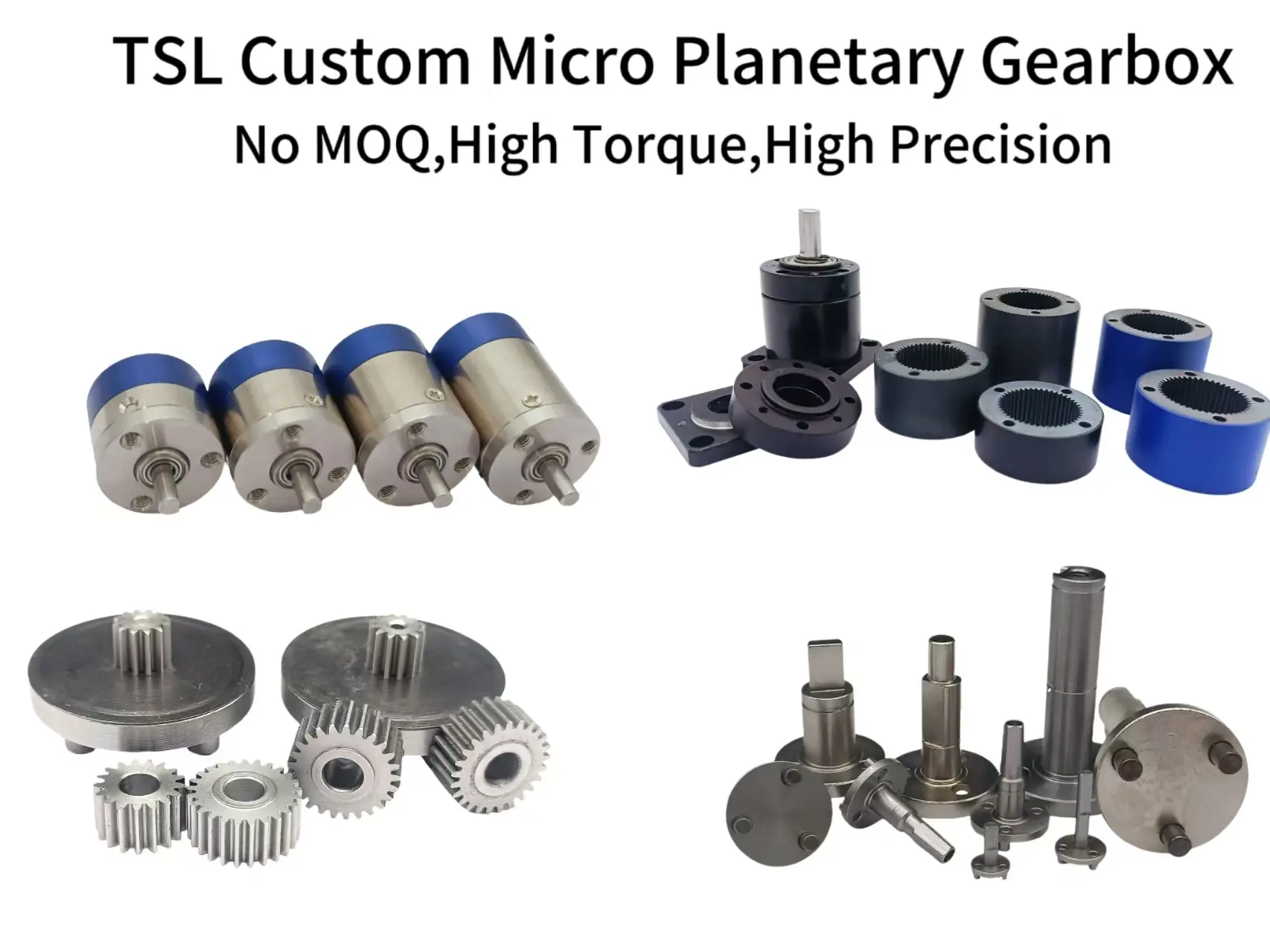
TSL Motor develops custom planetary gearboxes from 6 mm to 52 mm, using proven platforms whenever possible and introducing new gears, carriers or housings only when the application requires them. Customization may include the reduction ratio, stage count, gear material, output shaft, bearings, lubrication, backlash, motor matching and encoder integration.
This guide explains what can realistically be customized, when platform-based modification is sufficient, and what operating data engineers need before recommending a gearbox design.
Wichtigste Erkenntnisse
- Custom design optimized for your application.
- Diameter range from 6mm to 52mm.
- Based on proven platforms, not from scratch.
- No MOQ – supports prototypes and mass production.
- Plastic, metal, or hybrid gears by application.
- Proven in robotics, medical, and precision devices.
- Full system-level support beyond just the gearbox.
Why Choose a Custom Planetary Gearbox
A custom planetary gearbox becomes necessary when a standard model cannot simultaneously meet the required output speed, torque, installation envelope, duty cycle, noise, backlash, service life or mechanical interface. In these projects, selecting a gearbox by diameter and reduction ratio alone is rarely sufficient.
Customization does not always require an entirely new transmission. TSL Motor first evaluates whether an existing gearbox platform can meet the application through targeted changes such as:
- Reduction ratio and number of stages;
- Gear material and heat treatment;
- Output shaft, flange and mounting interface;
- Bearings and permitted shaft loads;
- Lubricant and operating-temperature range;
- Backlash and noise control;
- Motor, encoder and driver integration.
Using a proven platform can reduce tooling requirements and validation risk. A full-custom design becomes necessary when the required ratio, gearbox diameter, axial length, gear geometry, carrier, bearings or housing cannot be achieved through the existing planetary gear motor range.
A Real Case: Why a Standard Gearbox Was Not Enough
One customer originally used a DC worm gear motor, but the application required two operating characteristics that were difficult to balance:
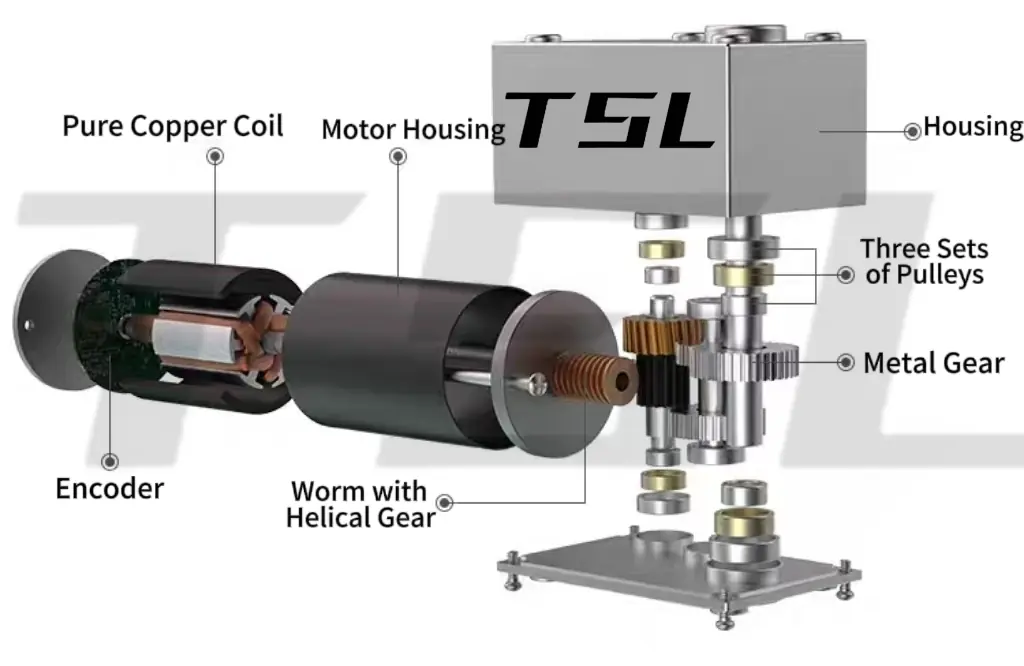
- The output had to remain non-self-locking;
- The transmission had to resist reverse motion up to a specified external torque after power was removed.
These requirements do not mean that the transmission must be completely self-locking. Instead, the mechanism must remain backdrivable above a defined threshold while resisting unwanted reverse movement below that threshold.
The project also had a fixed installation envelope, output-speed requirement and efficiency target. A standard gearbox could not satisfy all these conditions without compromising size, torque or backdrivability.
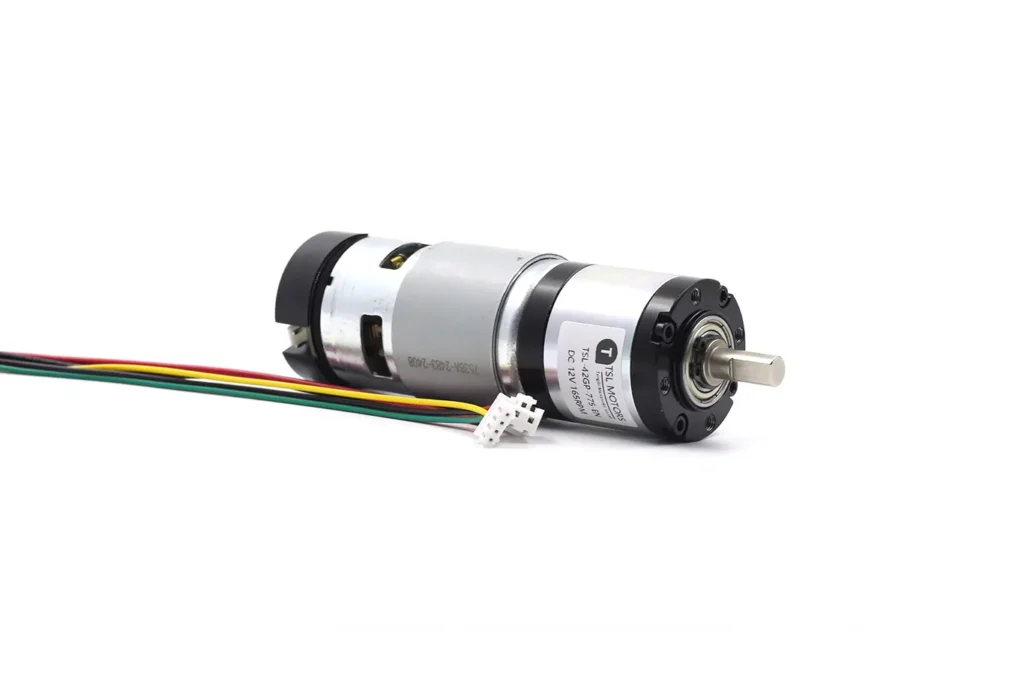
TSL Motor therefore evaluated a planetary transmission based on the actual operating point. The number of stages, reduction ratio, gear materials and mechanical interfaces were adjusted while keeping the gearbox within the available space.
The final configuration was verified against the specified reverse-torque threshold, efficiency, temperature rise, noise and durability requirements. Reverse-holding capability must always be stated together with the test torque, load direction, temperature, lubricant and running condition rather than presented as an absolute property.
6mm–52mm Micro Planetary Gearbox Solutions
In the micro and small transmission field, we focus on planetary gearbox design and manufacturing. Our products cover diameters from 6mm to 52mm, delivering high torque and stable transmission performance within extremely compact volumes.
This size range is particularly suitable for applications with strict requirements for size, weight, and reliability.
For example, surgical and precision medical instruments demand extremely compact structures. In such cases, we typically recommend 6mm–16mm micro gear motors, achieving both compact integration and high-precision control.
For robotic dexterous hands, our mainstream product diameters include 8mm, 10mm, 12mm, 13mm, and 16mm.
Platform-Based Customization or Full Custom Development?
Most custom planetary gearbox projects do not require a completely new transmission. If an existing platform already matches the required diameter, general torque range and installation concept, TSL Motor can modify only the parameters that prevent the standard configuration from meeting the application.
Common platform-based changes include:
- Selecting a different existing stage combination;
- Changing gear materials or heat treatment;
- Customizing the output shaft or mounting flange;
- Changing bearings or the output-support structure;
- Selecting a different lubricant;
- Matching another brushed, brushless, coreless or stepper motor;
- Adding an encoder, driver, connector or customized wiring.
This approach can shorten development and reduce tooling requirements because part of the gear train, housing and assembly process has already been verified. However, every modified configuration still requires drawing confirmation, sample testing and application-level validation.
Full-custom development becomes necessary when the required diameter, axial length, reduction ratio, gear module, tooth combination, ring gear, carrier, housing or bearing arrangement falls outside the adjustment range of the existing platform.
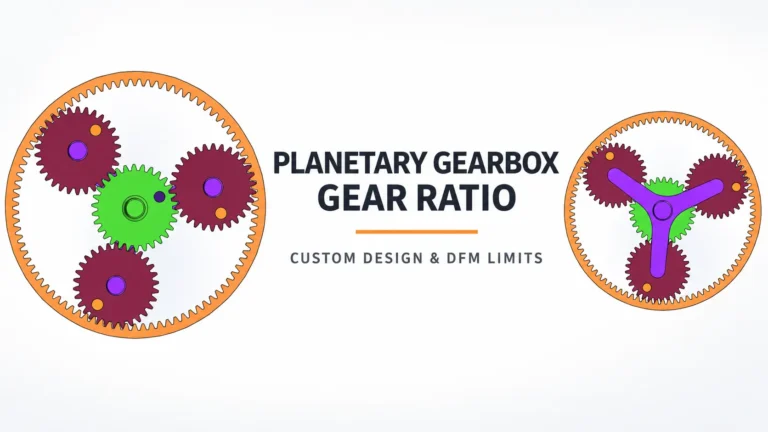
A mathematically possible ratio must also pass gear geometry, strength, assembly and manufacturing checks, as explained in our custom planetary gearbox ratio and DFM guide.
| Evaluation Item | Platform-Based Customization | Full Custom Development |
|---|---|---|
| Starting point | Existing verified gearbox platform | New gearbox architecture or core components |
| Typical changes | Ratio combination, materials, shaft, bearings, lubricant, motor or encoder | New gears, carrier, ring gear, housing, bearings or complete transmission layout |
| Tooling requirements | Existing tooling may be reused, although some new parts may still require tooling | New tooling, fixtures and inspection methods are normally required |
| Development time | Usually shorter when major components can be retained | Usually longer because more design and validation work is required |
| Technical risk | Lower, but application testing is still necessary | Higher because the new tolerance chain and operating behaviour must be verified |
| Suitable projects | The standard platform is close to the required operating point | The core geometry or performance target cannot be reached with an existing platform |
The actual development schedule and cost depend on how many components must be changed, whether new tooling is required, the number of prototype iterations and the required validation program. They should therefore be confirmed after the application and drawings have been reviewed.
Medical Instrument Case
A customer developing a minimally invasive medical instrument required a 10 mm planetary gear motor with low operating noise and a target service life exceeding 500 hours under defined operating conditions. The installation diameter was compatible with an existing TSL Motor platform, so a completely new gearbox was unnecessary.
The project focused on several targeted modifications:
- The reduction ratio was adjusted to match the required output speed and torque;
- Gear materials were selected according to the required life and noise target;
- Tooth contact and lubrication were optimized for quieter operation;
- The output shaft was customized to fit the customer’s mechanism.
The prototype configuration was then evaluated at the intended speed, load, duty cycle, temperature and mounting condition. The service-life target could only be confirmed after the complete motor and gearbox assembly had passed the agreed test program.
This case shows the practical value of platform-based customization: engineers retain verified components where possible and redesign only the features that directly affect the application. It reduces unnecessary development work without treating a modified gearbox as automatically qualified for production.
Plastic, Metal or Hybrid Planetary Gears?
Gear material should be selected from the actual load, speed, temperature, noise, duty cycle, expected life and production volume. Plastic gears are not automatically limited to low-quality applications, and metal gears do not automatically guarantee higher torque or longer life.
Plastic Planetary Gearboxes
Engineering plastics such as POM, PA and PEEK can reduce gearbox weight, rotating inertia and operating noise. Injection molding can also provide economical and consistent production when the volume justifies the tooling.
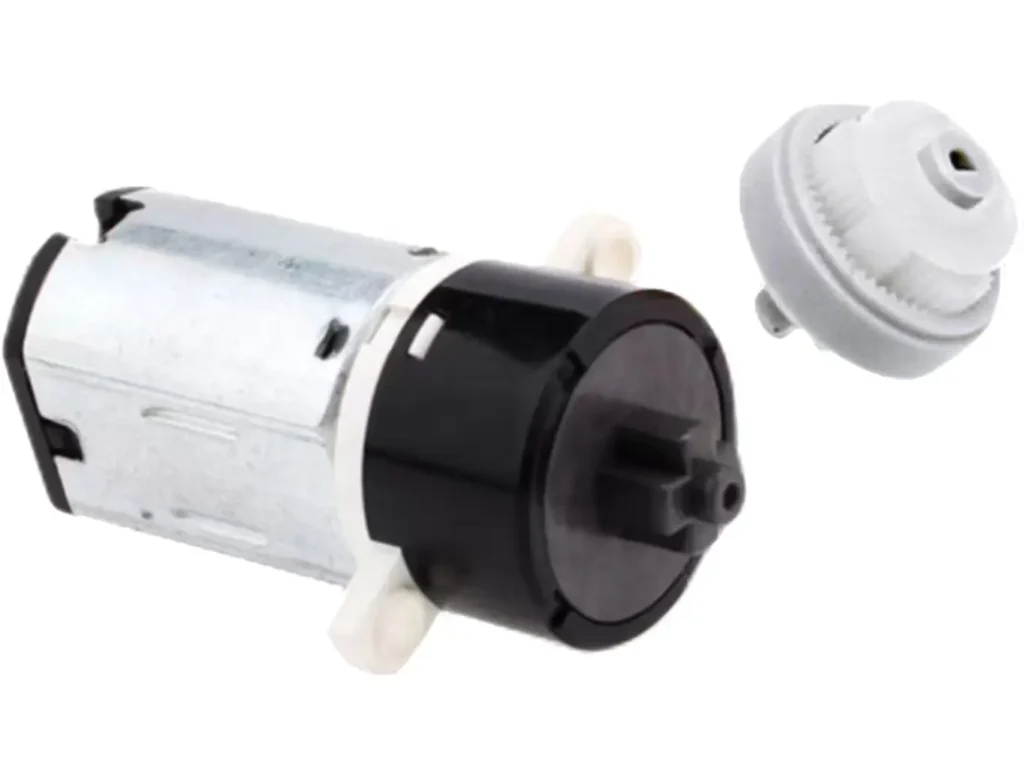
The actual capability depends on the polymer grade, reinforcement, gear module, tooth width, operating temperature, lubricant, humidity, continuous load and peak load. Material creep and dimensional changes must be considered when the gearbox operates continuously, carries a sustained load or experiences elevated temperatures.
Non-standard plastic gears normally require a dedicated mold. Prototype gears produced by machining or additive manufacturing may be useful for initial fit checks, but they do not always reproduce the mechanical properties, surface finish or dimensional stability of production injection-molded gears.
Metal Planetary Gearboxes
Steel, stainless steel, brass and powder-metallurgy materials can provide greater tooth strength, temperature resistance and dimensional stability when correctly specified. Metal gears are commonly considered for higher loads, repeated shock, frequent reversal or longer-life applications.
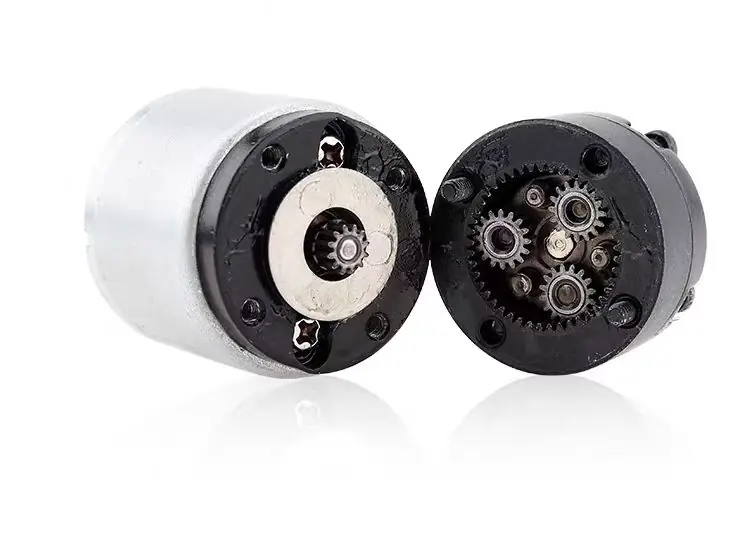
Final performance still depends on gear accuracy, material grade, heat treatment, hardness, surface finish, planet-pin support, carrier stiffness and lubrication. A poorly supported or inaccurately manufactured metal gear train may produce more noise and wear without delivering the expected increase in usable torque.
Plastic + Metal Hybrid Structures
A hybrid planetary gearbox uses different materials where their properties provide the greatest benefit. A common arrangement places suitable polymer gears in a higher-speed stage to reduce noise and inertia, while metal gears are used in a later stage that carries greater torque.
This arrangement is not a universal rule. The correct material sequence depends on the reduction ratio, stage loading, temperature, shock load, target life and manufacturing process. In some designs, only the sun gear, output stage or selected load-bearing components need to be metal.
For a broader comparison of gearbox sizes, materials and operating limits, see our micro planetary gearbox materials and selection guide.
Case Example: Robot Vacuum Drive Module
A customer originally used a full-metal planetary gearbox in a robot vacuum drive module. The transmission met the mechanical requirements, but its operating noise and component cost were higher than necessary for the actual load.
TSL Motor retained the standard gearbox platform and changed selected components:
- Suitable planet gears were changed from metal to engineering plastic;
- The metal sun gear was retained where greater tooth strength was required;
- The output stage remained metal to carry the higher transmitted torque;
- Tooth contact and lubrication were adjusted to reduce operating noise.
According to the comparison records for this project, the revised design reduced component cost by approximately 30% and measured operating noise by approximately 40% under the agreed test conditions. These percentages describe this specific gearbox, operating point and test method; they should not be treated as universal results for every hybrid planetary gearbox.
The revised assembly was released only after output torque, temperature rise, noise and durability were tested in the customer’s drive module. The case demonstrates that material selection should follow the load distribution and application requirements rather than the assumption that an all-metal gearbox is always the best solution.
More Than a Gearbox: Complete Transmission System Design
A custom planetary gearbox cannot be evaluated independently from the motor, driver and load. A gearbox ratio may produce the required theoretical output speed, but the complete system can still fail if the motor operates outside its efficient range, the driver cannot supply the acceleration current, or the gearbox exceeds its permissible continuous torque.
TSL Motor can evaluate the motor and gearbox as one drive system. Depending on the project, the solution may include a brushed DC motor, brushless motor, coreless motor or stepper motor together with a planetary gearbox, encoder, driver, brake, connector or customized wiring.
What Must Be Matched as a System?
| System Element | Main Parameters to Confirm |
|---|---|
| Application load | Required output speed, continuous torque, peak torque, load inertia and direction changes |
| Motor | Rated voltage, operating speed, rated torque, current, starting behaviour and temperature rise |
| Planetary gearbox | Reduction ratio, number of stages, efficiency, allowable torque, backlash and service life |
| Output interface | Shaft shape, mounting flange, bearings, radial load, axial load and coupling method |
| Feedback system | Hall sensors, incremental encoder, absolute encoder, installation position and required resolution |
| Motor driver | Supply voltage, continuous current, peak current, commutation method and control interface |
| Operating environment | Temperature, contamination, vibration, noise limit, lubricant and duty cycle |
| Production requirements | Prototype quantity, annual volume, inspection criteria and traceability requirements |
The basic relationships can be estimated as:
Output speed ≈ Motor speed ÷ Reduction ratio
Output torque ≈ Motor torque × Reduction ratio × Gearbox efficiency
These equations are useful for initial sizing, but they do not confirm that the motor can operate continuously at the calculated point. The final selection must also remain within the motor’s thermal limit and the gearbox’s permissible continuous and peak torque.
For applications using a brushless motor, the controller, Hall-sensor arrangement, startup load and low-speed control requirements should be evaluated together with the gearbox. Additional selection considerations are covered in our Leitfaden für bürstenlose Planetengetriebemotoren.
Feedback Position Matters
An encoder installed on the motor can measure rotor movement and provide fine theoretical output resolution after the reduction ratio is applied. However, it cannot directly observe backlash, bearing clearance or elastic deformation located after the encoder.
When accurate bidirectional positioning is required, engineers should determine whether the encoder measures motor position or actual gearbox output position.
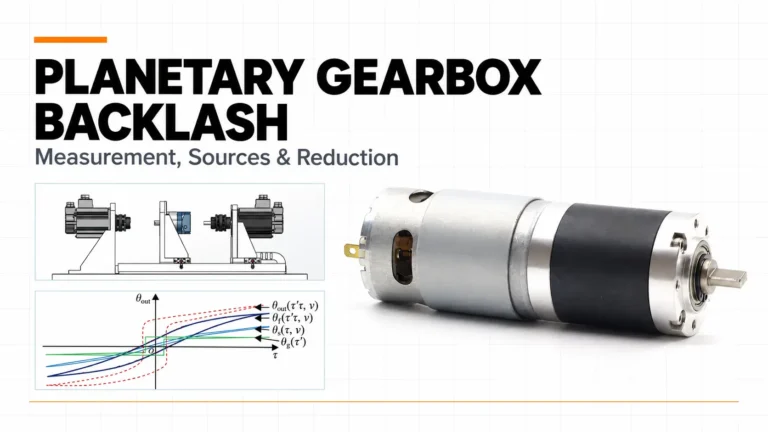
Backlash requirements should also include the input-locking method, output test torque and measurement condition, as explained in our planetary gearbox backlash measurement guide.
Multi-Stage and Hybrid Transmission Systems
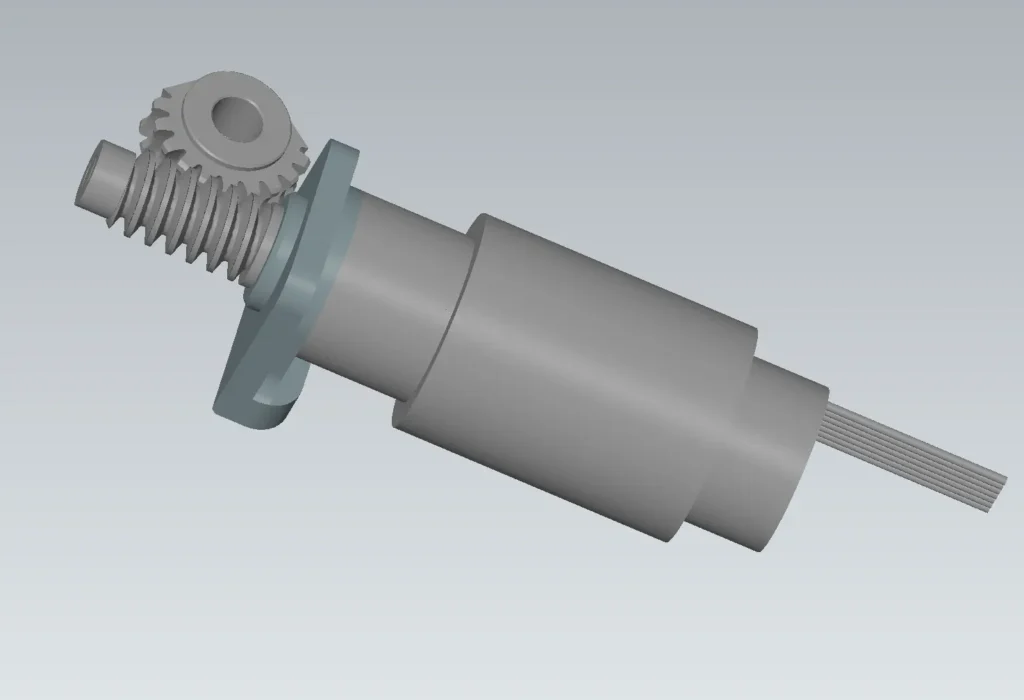
Some applications require more than a conventional planetary gearbox. TSL Motor can evaluate systems that use a planetary stage followed by a worm stage for a right-angle output or a defined reverse-drive characteristic. An additional spur or parallel-shaft transfer may also be considered when the output must be offset from the motor axis.
Every additional transmission stage introduces extra efficiency loss, backlash, tolerance accumulation, noise and heat. A hybrid structure should therefore be selected only when its packaging or motion advantage justifies the added mechanical complexity.
From Prototype to Production
System-level development begins with the required output motion and load rather than an existing motor model. TSL Motor then evaluates the motor operating point, gearbox configuration, mechanical interface, feedback method and driver requirements before preparing the configuration drawing.
Prototype testing should reproduce the intended load, duty cycle, direction changes, supply voltage, mounting structure and ambient temperature. Once the design is confirmed, production drawings, inspection dimensions, test limits and component traceability can be defined for pilot and volume production.
Manufacturing and Quality Control at TSL Motor
A custom planetary gearbox is not complete when the CAD model works. Production must consistently control gear geometry, planet-pin position, carrier accuracy, bearing fits, shaft concentricity, lubricant quantity and assembly conditions.
TSL Motor combines motor manufacturing, gearbox production, CNC machining, assembly and performance testing. The manufacturing process is selected according to component geometry, material, required accuracy, production volume and cost target.
Typical processes include:
- Gear hobbing for steel sun and planet gears;
- CNC turning and milling for carriers, shafts, planet pins and housings;
- Precision wire EDM for selected internal ring gears with demanding profile or accuracy requirements;
- Injection molding for volume production of plastic gears;
- Heat treatment and surface finishing when required by the material and load;
- Controlled assembly, lubrication and end-of-line testing.
A more expensive manufacturing process is not automatically the correct choice. The process should provide the required accuracy, life and production consistency without adding cost that does not improve application performance.
What Should Be Inspected?
A project-specific quality plan may include:
- Incoming material and component inspection;
- Gear tooth thickness, profile, pitch and runout;
- Carrier-hole position and planet-pin dimensions;
- Shaft diameter, concentricity and mounting interfaces;
- Bearing and housing fits;
- Lubricant type and application quantity;
- No-load speed, current and rotation direction;
- Loaded output speed, torque and efficiency;
- Noise and vibration under defined mounting conditions;
- Backlash or lost motion under a specified test torque;
- Temperature-rise and endurance testing.
Not every inspection is performed in the same way or at the same frequency. Critical dimensions and functional parameters should be divided into 100% production checks, sampling inspections and design-validation tests before production begins.
For applicable machined cylindrical gears, ISO 6336-1 provides a framework for evaluating gear load capacity, while ISO 1328-1 defines a flank-tolerance classification system for individual cylindrical involute gears.
These standards do not guarantee the performance of an assembled planetary gearbox. Very small modules, molded plastic gears, conventional powder-metallurgy gears and configurations outside a standard’s stated scope still require project-specific calculations, dimensional inspection and assembled testing.
From Engineering Samples to Volume Production
TSL Motor supports engineering samples, pilot batches and volume production without imposing a fixed minimum order quantity on development projects. Sample quantity, tooling requirements and test scope are determined by the maturity and technical risk of each design.
Before mass production, the approved sample configuration should be converted into controlled drawings, bills of materials, assembly instructions and inspection limits. Changes to gear material, lubricant, motor winding, supplier, heat treatment or critical dimensions should be reviewed because each change can affect noise, efficiency, temperature and service life.
The objective is not only to produce a gearbox that works once. The production process must repeatedly deliver units that remain within the agreed mechanical and electrical limits.
What Information Should You Provide for a Custom Planetary Gearbox?
A useful custom gearbox request should begin with the required load-side performance rather than a preferred motor model or reduction ratio alone. TSL Motor can evaluate a suitable platform more accurately when the actual operating point, installation space and expected life are known.
| Required Information | What to Provide |
|---|---|
| Anwendung | What the motor and gearbox must move, and how the mechanism operates |
| Output speed | Normal operating speed and required speed range in rpm |
| Continuous torque | Torque required during normal operation |
| Peak torque | Maximum starting, acceleration, shock or temporary load |
| Duty cycle | Running time, stopping time, cycles per hour and expected direction changes |
| Power supply | Available voltage, current limit and motor-driver information |
| Installation envelope | Maximum gearbox diameter, total length and available mounting space |
| Output interface | Shaft diameter, length, shape, thread, gear, pulley, flange or coupling |
| Shaft loads | Expected radial load, axial load and bending moment |
| Positioning requirement | Permissible backlash, repeatability and required output accuracy |
| Feedback and control | Hall sensors, incremental encoder, absolute encoder or open-loop control |
| Noise requirement | Target noise level, measurement distance, speed, load and mounting condition |
| Environment | Operating temperature, humidity, dust, chemicals, sterilization or other exposure |
| Service life | Required operating hours, cycles or product life |
| Production volume | Prototype quantity, pilot quantity and estimated annual demand |
Start from the Output Requirement
If the motor has not yet been selected, provide the required output speed, continuous torque, peak torque and duty cycle first. TSL Motor can then evaluate the motor speed, power, winding, gearbox ratio and number of stages as one system.
If the motor is already fixed, provide its model, rated voltage, no-load speed, rated operating point, shaft dimensions and performance curve. A gearbox cannot be selected accurately from motor voltage and diameter alone.
Define Continuous and Peak Loads Separately
Continuous torque determines the long-term thermal and mechanical loading of the drive. Peak torque describes temporary conditions such as startup, acceleration, impact, jamming or emergency operation.
The duration and frequency of the peak load must also be stated. A gearbox that can tolerate a short torque pulse may not survive if the same torque is repeatedly applied or maintained for several seconds.
Provide Drawings When the Space Is Fixed
A 2D drawing, 3D model or installation sketch can reveal constraints that a dimensional list may miss. Useful details include the mounting shoulder, screw positions, shaft engagement, surrounding components, cable direction and assembly sequence.
When replacing an existing gearbox, customers can also provide the current model, drawings, operating data and the reason for replacement. Noise, insufficient torque, excessive backlash, short life, overheating, size or supply instability can lead to completely different design changes.
What If Some Parameters Are Unknown?
Not every project begins with a complete specification. Customers can first provide the available drawing, current motor or gearbox, target motion, known load and the main problem that must be solved.
TSL Motor can use this information for an initial feasibility review and identify which parameters still require calculation or testing. Customers can submit the available requirements through our custom geared motor solutions page.
Conclusion: Choosing the Right Custom Planetary Gearbox Partner
A custom planetary gearbox should begin with the required output motion, load, installation space and service life—not with a preferred diameter or reduction ratio alone. The motor, gearbox, feedback device, driver and load must be evaluated as one drive system.
When a proven platform is close to the required operating point, targeted customization can reduce development time, tooling requirements and technical risk. A full-custom gearbox is more appropriate when the required gear geometry, diameter, length, bearings, housing or mechanical interface cannot be achieved through an existing platform.
TSL Motor supports planetary gearbox platforms from 6 mm to 52 mm, including customized ratios, gear materials, shafts, bearings, lubrication, motor matching and encoder integration. To begin an engineering review, provide the available drawing, required output speed, continuous and peak torque, duty cycle, installation space and expected production volume, or contact TSL Motor with the information currently available.
FAQ
Can Any Planetary Gearbox Ratio Be Customized?
Not every numerical ratio can be manufactured within a fixed diameter and length. TSL Motor must check integer tooth counts, available stage combinations, gear interference, tooth strength, planet spacing and manufacturing feasibility before confirming a ratio. In some projects, the nearest manufacturable ratio is more reliable than forcing an exact theoretical value.
Does a Custom Planetary Gearbox Always Require New Tooling?
No. Ratio combinations, gear materials, output shafts, bearings, lubricants, motors, encoders and wiring can often be changed on an existing platform. New tooling is normally required when the project needs new gears, an internal ring gear, a carrier, a housing, molded plastic components or another major structural change.
Can TSL Motor Supply the Planetary Gearbox Without a Motor?
Yes. TSL Motor can evaluate a standalone planetary gearbox or a complete motor-and-gearbox assembly. When the customer supplies the motor, its shaft dimensions, mounting interface, rated speed, torque, power and performance curve are needed to verify compatibility.
Can Low Backlash or Low Noise Be Guaranteed?
Backlash and noise can only be confirmed under defined test conditions. The specification should state the test torque, rotational speed, load, mounting method, temperature, measurement position and acceptance limit. Sample and system-level testing are required before a production value is confirmed.
Is There a Minimum Order Quantity for Custom Development?
TSL Motor does not impose a fixed minimum order quantity on custom development projects. Engineering samples and pilot quantities are supported, while tooling requirements, sample pricing and validation scope depend on the extent of customization.
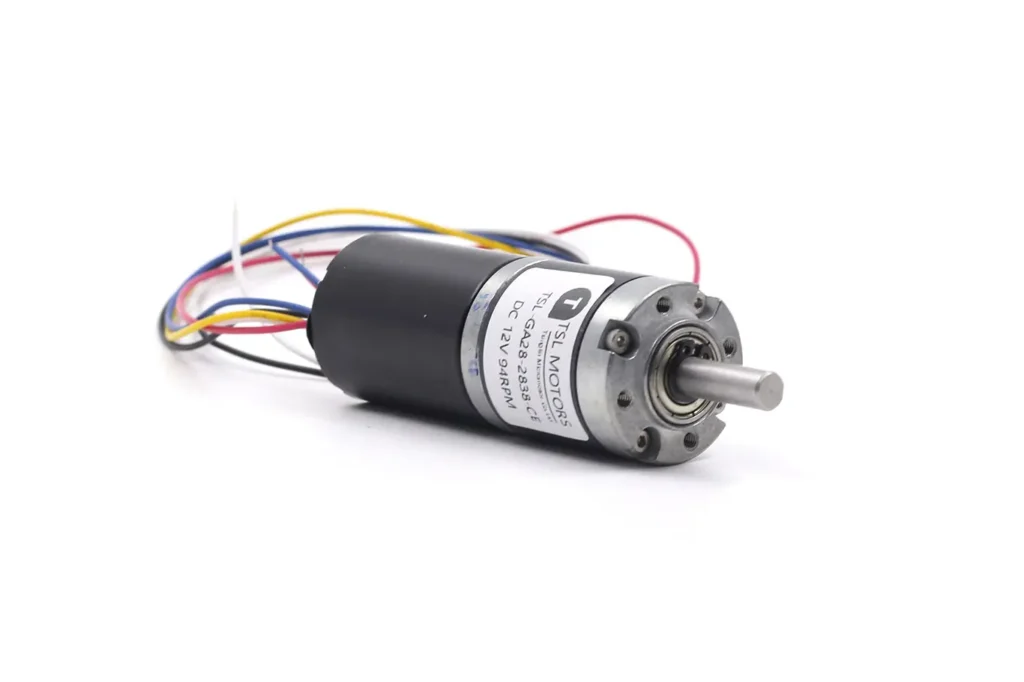
Planetengetriebemotor
Ein Planetengetriebemotor kombiniert ein mikroplanetares Getriebe mit einem DC-Motor und dient als Antriebsvorrichtung, die zur Geschwindigkeitsreduzierung und Drehmomenterhöhung konzipiert ist. Diese Motoren sind typischerweise zylindrisch und bestehen aus Materialien wie Stahl oder Messing. In einigen Fällen werden Kunststoffkomponenten verwendet, um spezifische Größen- und Leistungsanforderungen zu erfüllen.