Linear actuators, often called “straight-line actuators,” are essentially devices that convert electrical energy, compressed air, hydraulic energy, or material phase-change energy into linear push-pull motion.
For engineers, it is not just a single product. It is an entire system consisting of a “power source, motion conversion mechanism, guidance/support, sensing feedback, and a controller”. The most common design uses a motor and a screw to turn rotation into linear motion.
Meanwhile, pneumatic and hydraulic cylinders use fluid pressure to push a piston directly. Linear motors skip the screw and reduction mechanism entirely, generating linear motion directly through electromagnetic force.
Key Takeaways
- A linear actuator converts electricity, fluid pressure, or phase-change energy into direct linear push-pull motion.
- A complete system integrates a power source, a motion mechanism, a guidance assembly, sensors, and a controller.
- Electric linear actuators hold 85% of the global market share and power everything from consumer furniture to industrial robots.
- Hydraulic types generate massive thrust for heavy machinery, while pneumatic types offer fast, low-cost automation.
- Linear motors eliminate intermediate transmission parts to deliver high speeds and micron-level accuracy for semiconductors.
- Internal screw types like lead screws, ball screws, and planetary roller screws directly determine an electric actuator’s performance and price.
- Proper model selection requires analyzing key factory specs like rated voltage, required thrust, speed, stroke, and lead.
What is a linear actuator?
The definition of a linear actuator can be summed up in one sentence: it is an actuating component or system that converts input energy into linear displacement, linear speed, and linear force.
Parker describes hydraulic cylinders as devices that convert fluid pressure and flow into force and linear motion. Bosch Rexroth defines electric cylinders as devices that convert motor torque into linear motion using a screw drive. THK defines linear motor actuators as devices that convert electromagnetic force directly into linear motion.
Together, these three definitions perfectly cover the core physical picture of linear actuators.
Structurally, a typical linear actuator usually consists of five layers:

- The first layer is the power source, such as a servo motor, stepper motor, compressed air, hydraulic oil, or phase-change material.
- The second layer is the motion conversion mechanism, such as a screw assembly, a piston-cylinder setup, or a direct-drive magnetic field-coil structure.
- The third layer is the guidance and support system, including linear guides, bearings, cylinders, and piston rods.
- The fourth layer contains the boundary and protective parts, such as seals, wipers, end-position cushions, limit switches, and protective housings.
- The fifth layer handles sensing and control, utilizing encoders, displacement sensors, force sensors, drives, and upper-level controllers.
Taking the Rexroth electric cylinder as an example, its product page explicitly states a system composition of “screw drive — nut — piston rod guide — servo drive”. On the other hand, TSL’s SAG-1565 features an integrated electric cylinder structure combining a “coreless motor + planetary gearbox + planetary roller screw + linear Hall encoder”.
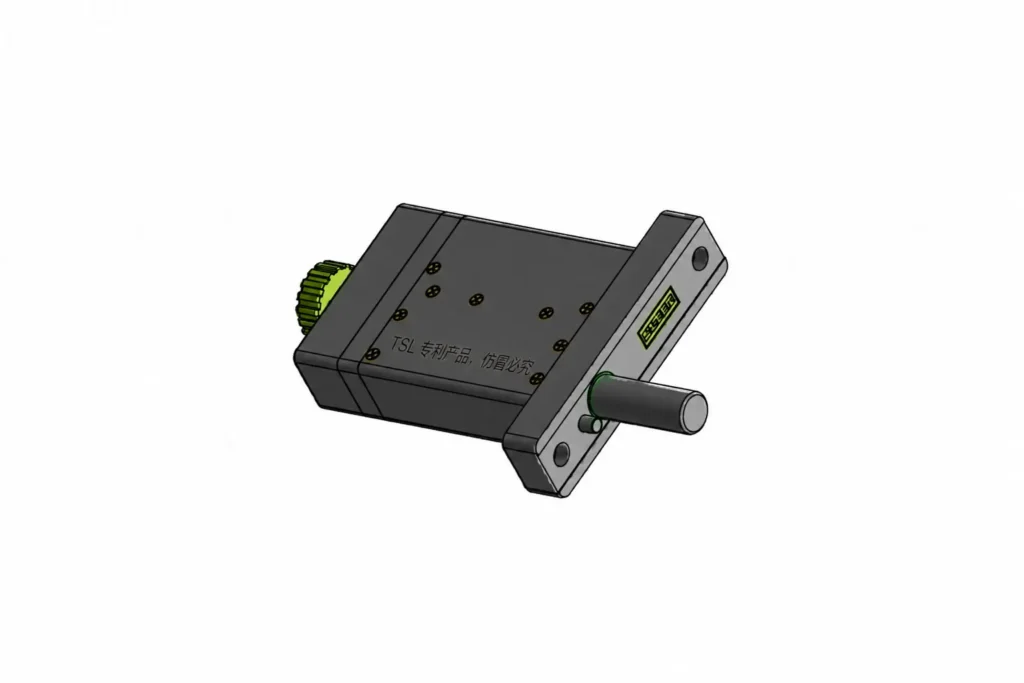
It is crucial to emphasize that “electric” and “screw” do not belong to the same classification dimension. Electric, pneumatic, and hydraulic terms fall under power source classifications. Meanwhile, lead screws, ball screws, planetary roller screws, and linear motors relate to the mechanism that generates force and displacement.
Types of Linear Actuators
The power source of a linear actuator determines its maximum thrust, response speed, and environmental adaptability. Meanwhile, the screw type—applicable only to electric actuators—determines its accuracy, efficiency, and lifespan. These two dimensions serve as the core criteria for model selection.
Classification by Power Source
Based on the power source, there are four major categories. These include electric linear actuators, which hold the highest market share, followed by hydraulic linear actuators, pneumatic linear actuators, and linear motors.
Electric Linear Actuators
Electric linear actuators are currently the most widely used type. They use electricity as their sole power source and convert motor rotation into linear push-pull motion through a mechanical structure.
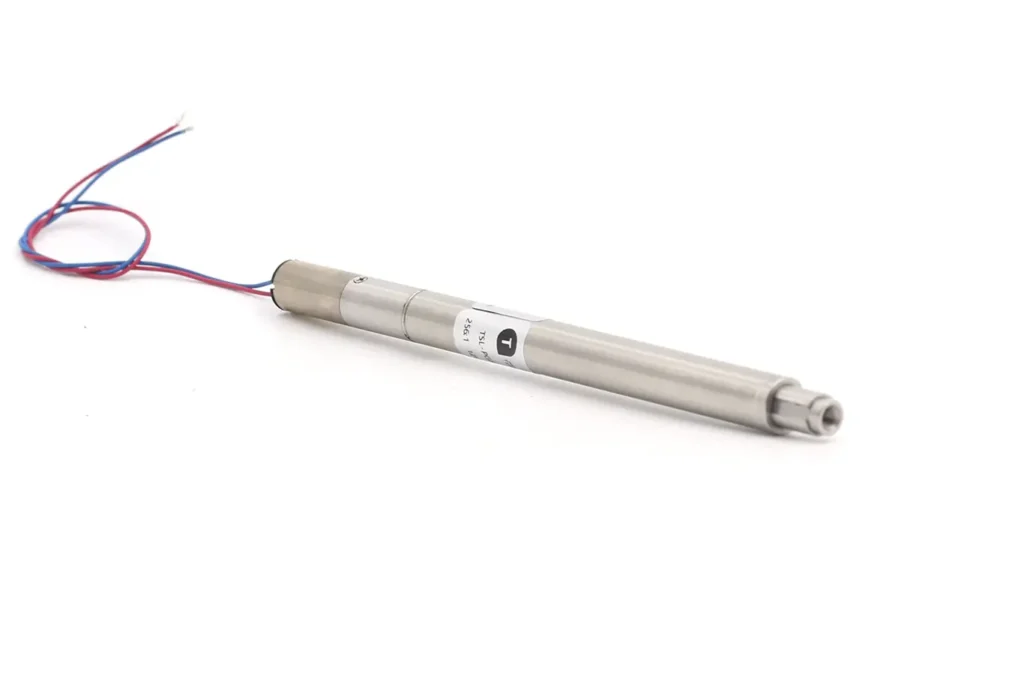
You can find them almost everywhere, from electric sofas at home to industrial robots in factories. Performance differences among various electric actuators come almost entirely from the type of internal screw used.
Hydraulic Linear Actuators
Aside from electric types, hydraulic linear actuators, commonly known as hydraulic cylinders, are the absolute top choice for heavy-duty scenarios. Powered by high-pressure hydraulic oil, they can generate massive thrust ranging from several tons to thousands of tons. They also offer excellent shock resistance and fast response speeds.
The construction machinery we see daily, like excavators, cranes, and bulldozers, relies entirely on hydraulic cylinders to drive their booms and buckets. However, hydraulic cylinders have obvious downsides. They require complex hydraulic pump stations and piping systems, making maintenance quite troublesome. There is also a risk of oil leaks, which can cause environmental pollution.
Pneumatic Linear Actuators
Pneumatic linear actuators, or air cylinders, work very similarly to hydraulic cylinders, but they swap out hydraulic oil for compressed air. Their structure is incredibly simple, and costs are very low. They move quickly and cause zero pollution since they use air, making them the first choice for low-cost automated production lines.
Air cylinders drive material handling on packaging lines, sorting actions in push equipment, and various pneumatic fixtures in factories. However, because air is compressible, air cylinders suffer from lower positioning accuracy and relatively small thrust. This makes them unsuitable for scenarios that demand high precision and constant thrust.
Linear Motors
Finally, there is a special type called the linear motor. Unlike all the previous actuators, it has no intermediate transmission mechanisms and converts electrical energy directly into linear motion.
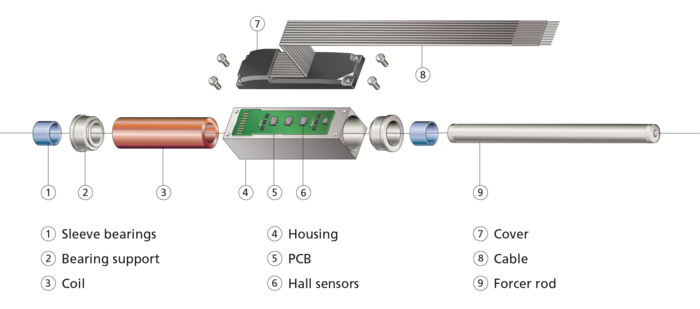
Its speed can exceed 10 meters per second, its positioning accuracy can reach the micron level, and its response speed has almost zero delay. This makes it the best choice for semiconductor manufacturing, laser processing, and high-speed sorting where speed and precision are critical.
However, linear motors are expensive, offer relatively low thrust, and generate significant heat during operation, requiring extra cooling measures. As a result, they are not yet widely adopted on a massive scale.
Classification by Screw Type
The screw is the “heart” of an electric actuator. Different screw types lead to massive performance gaps, directly setting the product’s positioning and price. Currently, there are three main screw types on the market.
Lead Screw Electric Actuators (Entry-Level)
The most basic type is the lead screw actuator, which uses a trapezoidal thread and sliding friction for transmission.
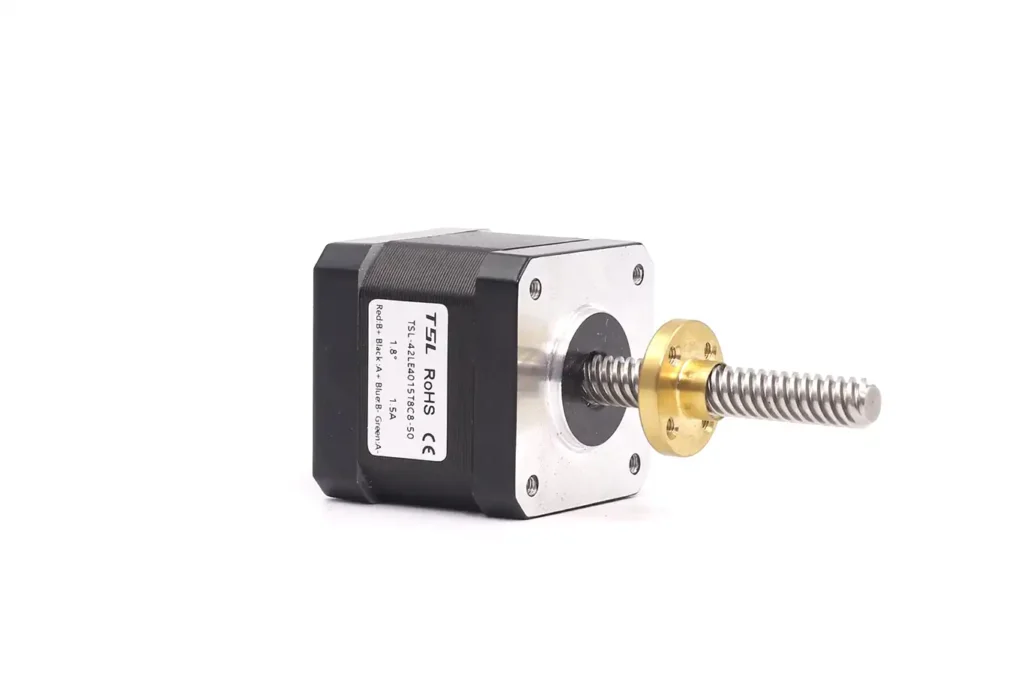
- Core Features: Lowest cost, inherent self-locking capability (the load will not slide down when power is off), and no need for an extra brake.
- Performance Parameters: Efficiency of 30%–50%, positioning accuracy of ±0.5 mm, and a lifespan of 10,000 to 30,000 cycles.
- Scenarios: Low-load, low-frequency consumer applications with low precision needs.
- Specific Products: Electric sofas, electric smart clothes hangers, electric window openers, and car seat adjusters.
Ball Screw Electric Actuators (Mid-to-High-End Mainstream)
Offering better performance than lead screws, ball screw actuators place small steel balls between the screw and nut to turn sliding friction into rolling friction.
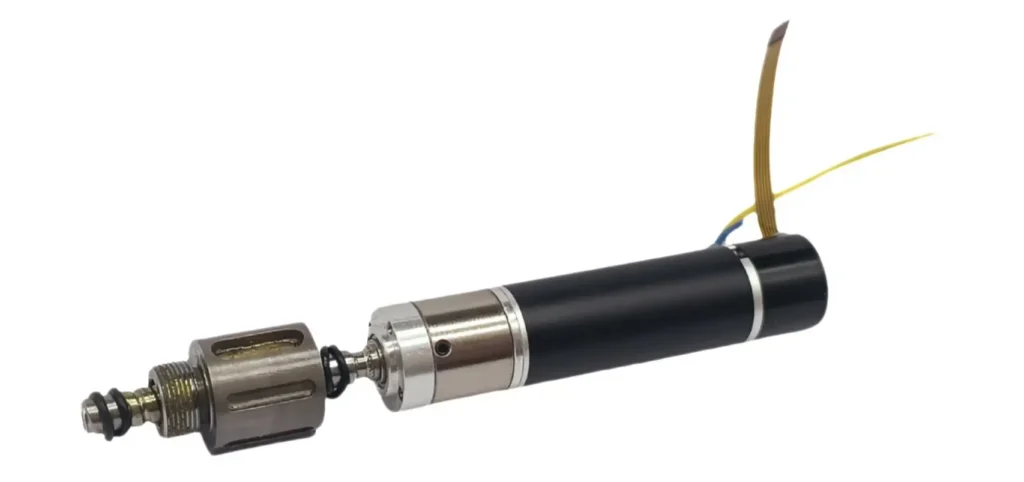
- Core Features: High efficiency (above 90%), high precision, long lifespan, and smooth operation.
- Performance Parameters: Efficiency of 85%–95%, positioning accuracy of ±0.01 mm, and a lifespan of 100,000 to 1,000,000 cycles.
- Scenarios: Medium-load, high-precision, and high-frequency industrial and medical settings.
- Specific Products: Industrial robots, electric standing desks, medical beds, and CNC machine feed systems.
Planetary Roller Screw Electric Actuators (Top-Tier Heavy-Duty)
The strongest performers among electric actuators are planetary roller screw actuators. They use multiple planetary rollers that mesh with the screw, creating a contact area much larger than that of a ball screw.
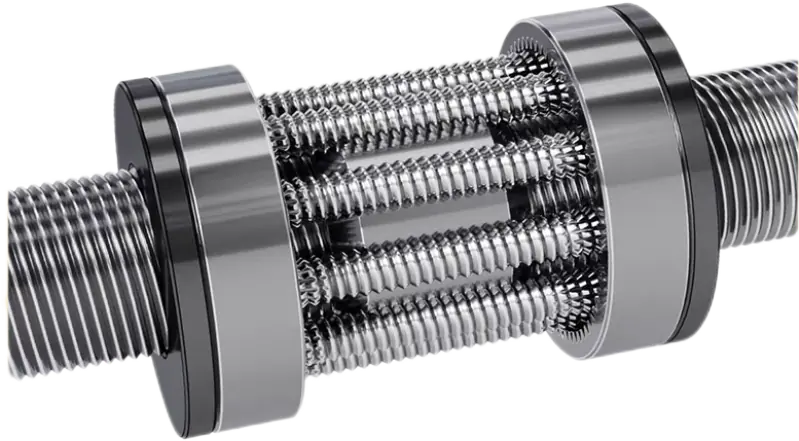
- Core Features: Highest thrust, highest precision, longest lifespan, and strong shock resistance.
- Performance Parameters: Efficiency of 80%–90%. For example, TSL’s SAG-1565 integrated planetary roller screw electric actuator delivers a positioning accuracy of ±3 microns and a lifespan of 1,000,000 to 10,000,000 cycles.
- Scenarios: High-end, heavy-duty, and high-precision industrial and defense applications.
- Specific Products: Robot dexterous hands, robotic joints, aerospace equipment, heavy machine tools, and new energy vehicle production lines.
Other Transmission-Type Electric Actuators
- Belt-driven type: Offers fast speeds and long strokes, but features small thrust and low precision. It suits light-load, high-speed handling.
- Rack and pinion type: Allows for infinitely extendable strokes and high thrust, but has average precision. It is ideal for large gantry equipment.
| Power Source Type | Core Motion Conversion Mechanism | Standout Features | Typical Applications |
| Electric | Trapezoidal Lead Screw | Low cost, excellent self-locking capability | Electric sofas, automotive seats |
| Electric | Ball Screw | High precision, high transmission efficiency | Industrial robots, medical equipment |
| Electric | Planetary Roller Screw | Large thrust capacity, long service life | Robotic joints, heavy-duty machine tools |
| Hydraulic | Piston-Cylinder Assembly | Extremely high output thrust | Construction machinery, marine vessels |
| Pneumatic | Piston-Cylinder Assembly | Low cost, fast actuation speed | Packaging production lines, pneumatic fixtures |
| Linear Motor | Direct electromagnetic drive | Ultra-high speed, superior precision | Semiconductor manufacturing, laser cutting |
How Do Linear Actuators Work?
No matter the type of linear actuator, their operating logic is actually very simple. They all follow the same basic workflow: a power source transforms into linear motion through a mechanical mechanism to drive a load and achieve precise control.
Let us break down exactly how they work based on the most common power sources.
Electric Linear Actuators
This is the type we encounter most often. Its core principle is simple: “the motor spins, and a mechanism changes that rotation into a push or pull motion”. Depending on the motion conversion mechanism (the screw type), working principles and performance vary greatly.
General Workflow
The motor powers up and starts spinning, outputting raw torque and speed.
For most models, the rotation passes through a gearbox to reduce speed while multiplying torque dozens or even hundreds of times. This is the secret behind how a tiny motor can push hundreds of kilograms.
The reduced rotational force drives the screw to spin.
The nut on the screw is held in place by the outer housing so it cannot spin along with it; it can only move linearly along the screw’s axis.
The nut connects to an extension rod, ultimately transferring the linear motion to the external load.
An encoder provides real-time feedback on the rod’s position. The controller then adjusts the motor’s speed and direction based on this feedback to achieve precise control.
Functional Differences Among Screw Types
1.Lead Screw Actuators:
The screw and nut make direct contact through trapezoidal threads, generating thrust as the thread surfaces press against each other. It works just like tightening a screw; as the screw turns once, the nut moves forward by one thread pitch.
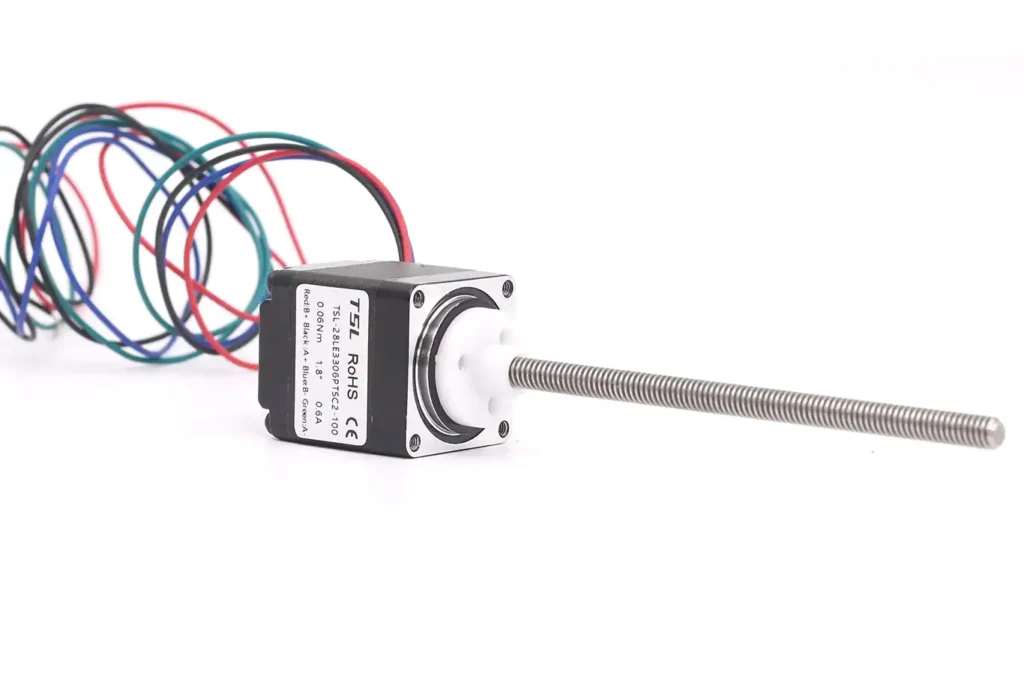
Since it relies on direct metal friction, its efficiency is low. However, the benefit is that when power cuts out, the threads lock up on their own, preventing the load from falling—a feature known as “inherent self-locking”.
2.Ball Screw Actuators:
Small steel balls pack the space between the screw and the nut, turning sliding friction into rolling friction. Similar to a bicycle’s ball bearings, this drastically cuts down friction and boosts efficiency past 90%.
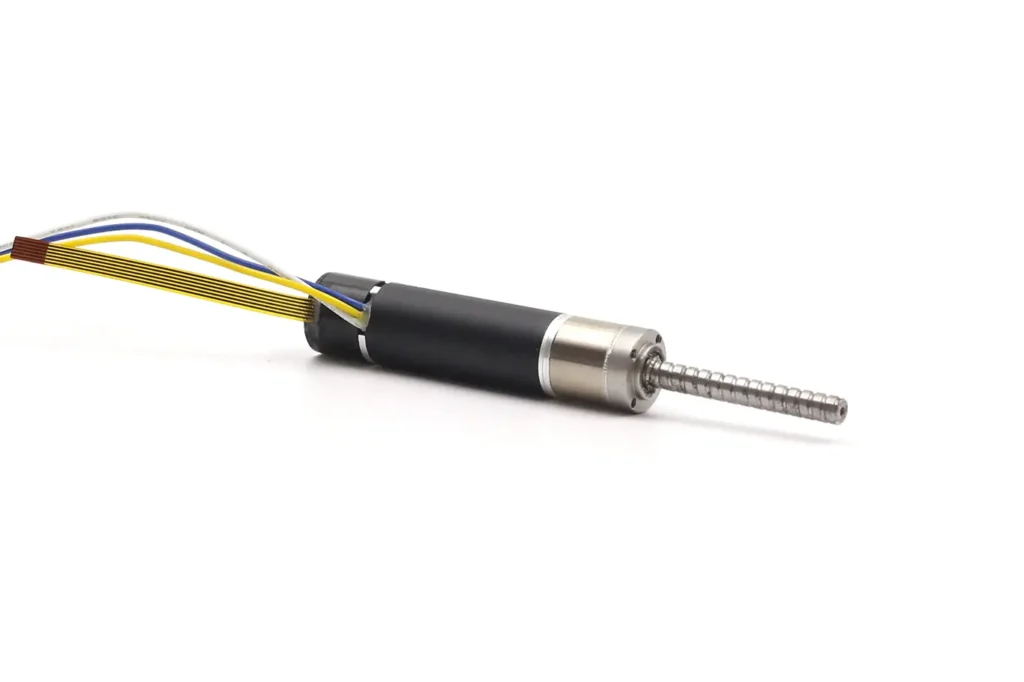
Yet, because friction is so low, it cannot self-lock when power is lost. An extra electromagnetic brake must be installed to hold the load in place.
3.Planetary Roller Screw Actuators:
This is currently the highest-performing type among electric actuators. Instead of steel balls, it uses multiple small rollers that rotate around the screw like planets to transmit force. Its contact area is over 10 times larger than that of a ball screw, allowing it to withstand far greater thrust and impact while lasting much longer.
Hydraulic Linear Actuators (Hydraulic Cylinders)
The working principle of a hydraulic cylinder relies on Pascal’s principle: fluid pressure inside a closed container transmits equally in all directions. You can picture it as a massive, sealed syringe:
- A hydraulic pump pressurizes hydraulic oil and sends it through hoses into the cylinder.
- The high-pressure oil acts on one face of the piston, generating immense thrust.
- This thrust pushes the piston forward inside the cylinder barrel, and the piston rod outputs this force to the load.
- To retract, a solenoid valve switches the oil path, directing high-pressure oil to the other side of the piston to push it back.
Because liquids are virtually incompressible, hydraulic cylinders can deliver massive forces ranging from several tons to thousands of tons, making them the premier choice for heavy-duty setups.
Pneumatic Linear Actuators (Air Cylinders)
An air cylinder works almost exactly like a hydraulic cylinder, except it swaps out hydraulic oil for compressed air.
- An air compressor generates compressed air, usually at a pressure of 0.4–0.8 MPa.
- A solenoid valve controls the entry of compressed air into either the front or rear chamber of the cylinder.
- The compressed air pushes the piston, outputting linear force and displacement.
- The solenoid valve switches the air pathways to cycle the piston back and forth.
Compared to hydraulic cylinders, air cylinders are simpler, cheaper, faster, and pollution-free. Their main drawback is that air can be compressed, leading to lower positioning accuracy and relatively smaller thrust.
Linear Motors (Direct Drive Type)
A linear motor is the most unique type because it has no intermediate transmission parts; it converts electrical energy directly into linear motion. You can think of it as a standard rotary motor that has been “cut open and unrolled flat”.
The stator of the original rotary motor becomes a long guide rail, and the rotor becomes a moving slider. When three-phase AC power flows into the stator, it creates a magnetic field that moves along the rail. Driven by this magnetic field, the slider travels right along with it in a straight line.
Because there are no transmission clearances or friction losses, linear motors can exceed speeds of 10 m/s, achieve micron-level positioning accuracy, and respond almost instantly. This makes them the ultimate choice for high-precision, high-speed applications like semiconductor tools and laser processing.
Application Scenarios and Selection Guide
The “optimal solution” for a linear actuator varies wildly across different industries.
In industrial automation, tasks like handling, positioning, pressing, and sorting are typically divided by precision and cycle time. Simple stopping, clamping, and sorting usually rely on pneumatics. High-precision modular stations, servo presses, and electronics assembly lean toward electric options.
Meanwhile, semiconductor tools, chip mounters, vision inspections, and long-stroke, high-speed transport heavily favor linear motors.
For instance, THK‘s GLM/SCL application cases target high-cycle equipment like glass substrate handling, chip mounters, and wafer/substrate inspection. Bosch Rexroth’s Smart Function Kit Pressing bundles electric cylinders, force sensors, servo drives, and industrial PCs directly for pressing and joining tasks.
Medical equipment and care furniture usually prefer electric actuators. This choice is driven not by maximum thrust, but by low noise, cleanliness, low-voltage power supplies, easy multi-axis coordination, and integrated safety features.
LINAK‘s medical bed solutions integrate weighing, out-of-bed detection, and bus control directly into the actuator system. In these scenarios, key selection metrics focus on noise, backlash, synchronization, EMC/certifications, and anti-pinching protection, rather than just peak thrust.
Home and furniture settings similarly rely on electric rods or lifting columns, seen in height-adjustable desks, care beds, TV lifts, cabinet lifters, and accessibility aids. Vehicle applications fall into two groups.
The first involves in-car or body functional parts like smart tailgates, ramps, steps, and side mirror adjusters. The second covers pressing, welding, assembly, and body construction in automotive manufacturing. The latter has increasingly adopted electric actuators in recent years to improve efficiency and precision.
Aerospace and robotics demand the highest comprehensive capabilities from actuators. The aerospace sector focuses on the maintainability, reliability, and standardized testing of Electro-Mechanical Actuators (EMAs) in more-electric or all-electric aircraft.
Robotics, however, prioritizes weight, controllability, backlash, energy efficiency, and integration. High-speed industrial robots, semiconductor pick-and-place tools, and vision systems favor linear motors, while wearable systems, flexible robots, and specialized lightweight mechanisms maintain a steady interest in Shape Memory Alloys (SMAs).
When performing front-line model selection, the most practical sequence is:
- Determine the maximum/continuous load and the force-speed curve.
- Set the stroke and cycle time.
- Look at repeatability and control methods.
- Check the environment, protection ratings, maintenance strategy, and fail-safe mechanisms.
Bosch Rexroth’s selection logic clearly outlines “full lifestyle load, required power, geometric conditions, environmental, and installation conditions”.
Parker’s hydraulic sizing guide lists capacity, stroke, speed, temperature, and mounting style as core constraints. For electric cylinders, TSL focuses directly on the customer’s five core needs: rated voltage, thrust requirements, linear speed, stroke, and lead.
Summary and Future Outlook
Linear actuators serve as the core power components of modern automation systems. By converting electrical, hydraulic, or pneumatic energy into controllable linear motion, they act as the “muscle” for any application requiring precise pushing or pulling, spanning from consumer goods to industrial and aerospace fields.
Through a dual-dimension framework of “power source + screw type,” we can clearly map their performance tiers.
Electric actuators dominate 85% of the market mainstream, using internal lead screws, ball screws, and planetary roller screws to establish clear performance steps from entry-level to top-tier applications. Meanwhile, hydraulic, pneumatic, and linear motor options fulfill distinct needs for heavy loads, low costs, and ultra-high speeds or precision, respectively.
Scientific selection is the key to successfully deploying a linear actuator, with different industries requiring distinct optimal solutions. Global manufacturers have developed mature selection frameworks.
Designing from practical customer needs, TSL highlights rated voltage, thrust, speed, stroke, and lead as the five core selection metrics. Their planetary roller screw electric cylinders, known for high thrust, high precision, and long lifespans, have become the preferred choice for high-end scenarios like robotic joints and new energy production lines.
Looking ahead, linear actuators will continue to evolve toward higher integration and intelligence, providing more reliable power support for the upgrading of smart manufacturing.
Micro Linear Actuators
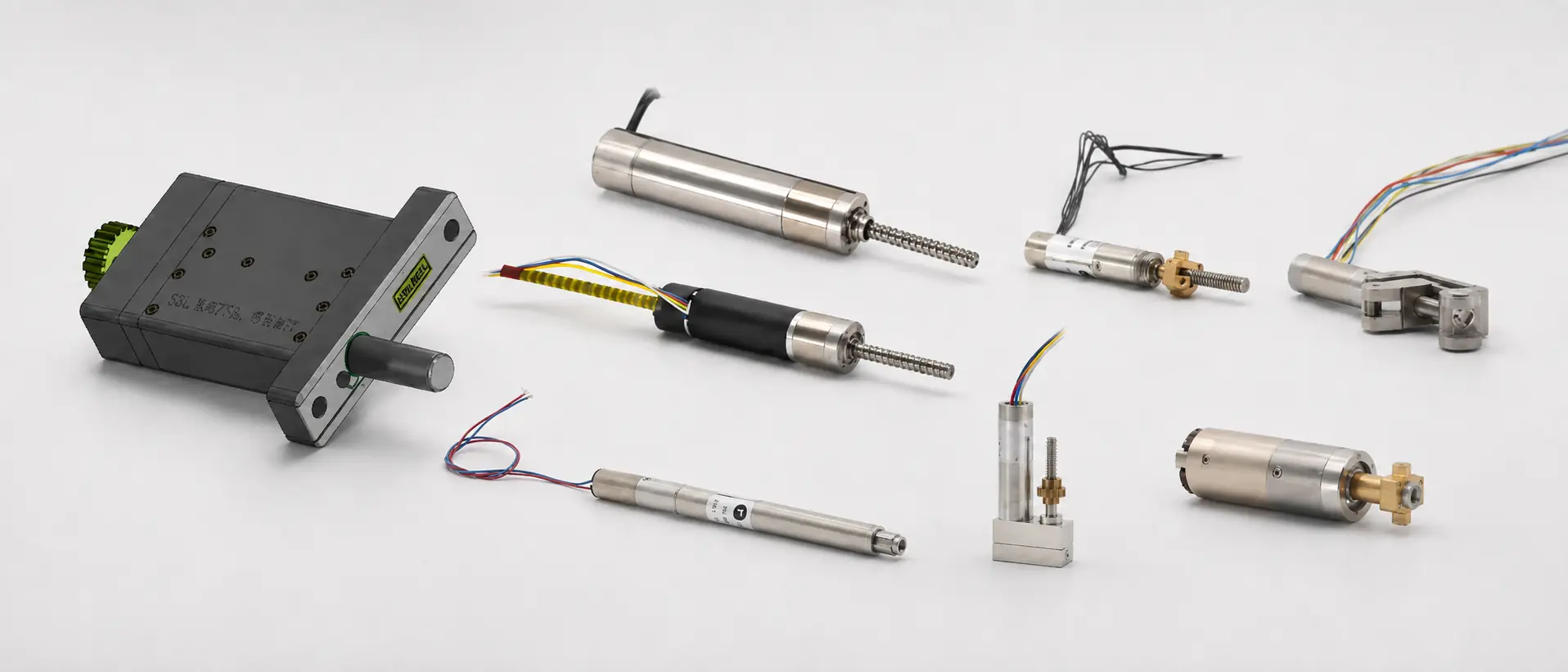
TSL Motor’s micro linear actuators integrate high-efficiency coreless DC motors with precision linear transmission systems to deliver rapid response, exceptional power density, and smooth motion control in an ultra-compact footprint. Unlike traditional stepper-driven solutions, these coreless variants offer higher speeds, lower noise, and zero cogging torque, making them the ultimate choice for highly dynamic and precise applications.